
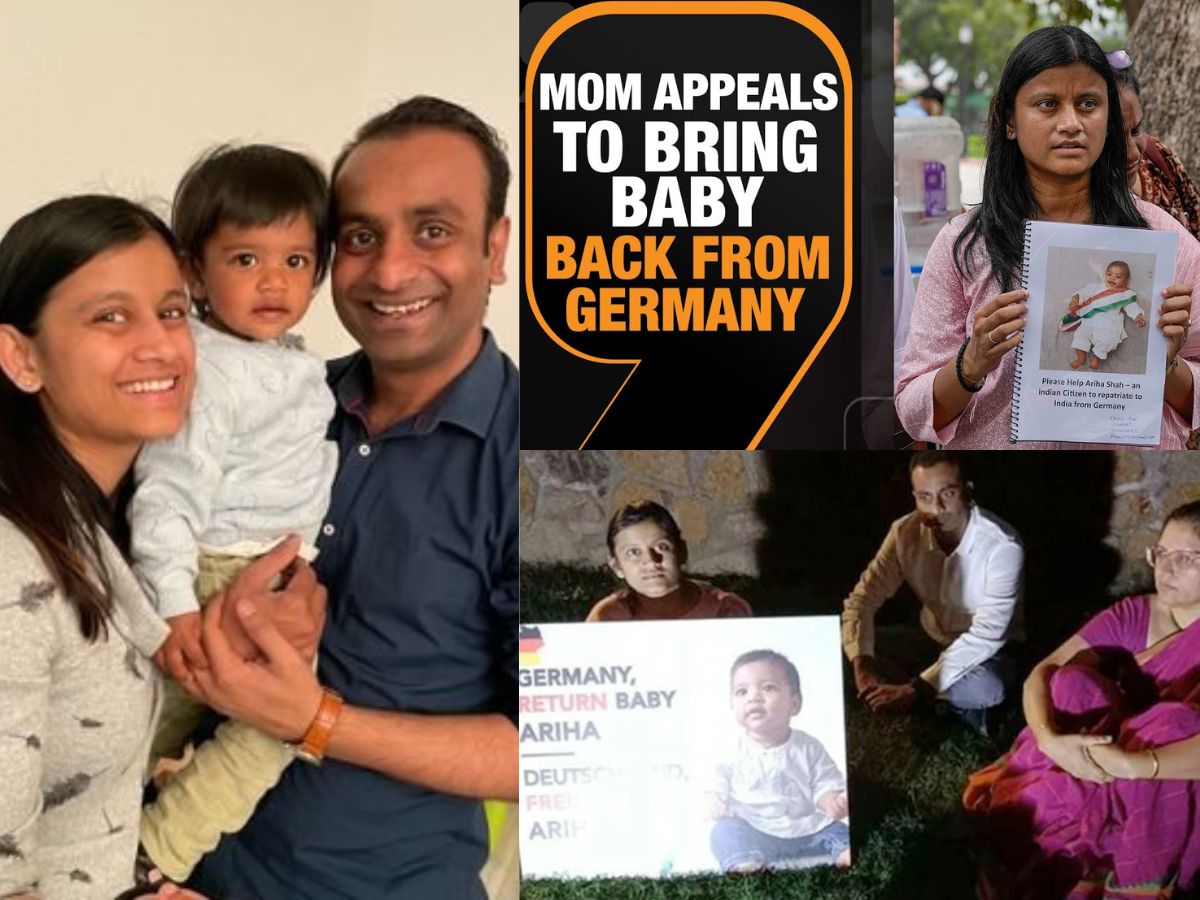
“It is essential that her cultural rights are ensured and she grows up in Indian surroundings,” External Affairs Minister S. Jaishankar stated firmly during talks with his German counterpart in New Delhi on Wednesday. The high-level diplomatic meeting placed a heart-wrenching human dilemma at its center: the fate of Indian baby Ariha Shah, who has been in German foster care for nearly four years, separated from her parents over a tragic misunderstanding.
India’s top diplomat pressed Germany for the early return of the child, marking a significant escalation in a case that has now drawn in the Prime Minister’s office and become a symbol of a painful cultural and legal clash.
Why is a Indian Child in German Foster Care?
The story begins in 2021 in Berlin. Ariha’s parents, Bhavesh and Dhara Shah, are a software engineer and his wife from Gujarat who had moved to Germany in 2018. Their daughter Ariha was born there, making her an Indian citizen.
The family’s nightmare began when Ariha, then seven months old, sustained an accidental injury in her private area. When her concerned parents took her to a hospital for care, German authorities misinterpreted the incident and suspected sexual assault. Immediately, the Jugendamt (Germany’s Youth Welfare Office) intervened, placing Ariha in foster care on September 23, 2021. The devastated parents were granted permission to see their child for only a few hours, once every fortnight.
Also Read: Houthis Fire Missiles At Israel After Rebel Leader Dies, Is The Region Sliding Into Wider War?
What Are the Allegations and Why Haven’t the Charges Stuck?
Initially, the allegations were severe. However, following intense intervention by the Indian government, German authorities conducted a thorough investigation and subsequently dropped the serious charge of sexual assault.There were never any formal accusations brought against the parents, and the proceedings were formally ended in February 2022.
Despite being cleared of the most heinous accusation, the nightmare continued for the Shah family. The Jugendamt filed a case to terminate the couple’s parental rights after transferring the case from a criminal to a civil one and accusing the parents of neglect. This legal maneuver has kept Ariha in the German foster care system, arguing it is in her “best interest,” a point India vehemently contests.
How High Has This Issue Reached in the Indian Government?
The case of Baby Ariha has become a major diplomatic priority for India. The government has argued consistently that a child’s best interest includes being raised in her native linguistic, religious, cultural, and social environment. This is not the first time the matter has been raised at the highest levels.
Last year, Prime Minister Narendra Modi himself brought up the issue directly with German Chancellor Olaf Scholz during their bilateral meeting in New Delhi. Foreign Secretary Vikram Misri noted that Chancellor Scholz assured he was “very closely following” the issue, indicating the seriousness with which it is being taken by both governments.
Also Read: What’s a ‘Sin Tax’? From Gold Flake, Pan Masala to Beer, Decoding GST’s New 40% Slab
What Happens Next for Ariha Shah?
Minister Jaishankar’s public statement underscores that discussions are ongoing and that India views the matter as urgent. “This matter needs to be resolved without further delay,” he asserted after his meeting. The push is now for German courts and child services to recognize the cultural imperative and the fact that the original criminal allegations were unfounded.
For now, Ariha remains in Berlin, growing older in a foster system, while her biological parents and a nation await a resolution that prioritizes her right to her heritage and family.