
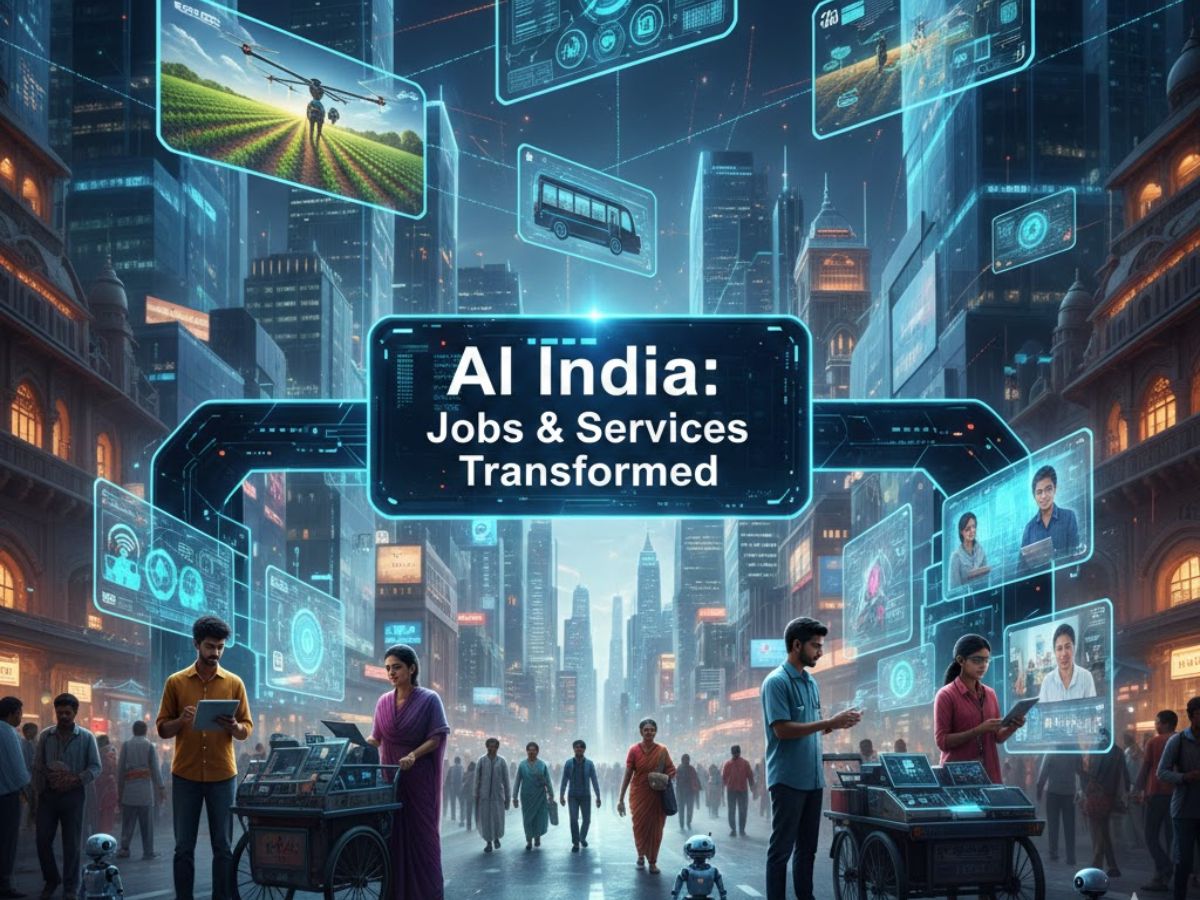
NEW DELHI, December 30, 2025 — The Indian government projects that its national push for Artificial Intelligence (AI) adoption will add up to $1.7 trillion to the country’s economy by 2035. This transformative growth will be powered by a new ₹10,300 crore, five-year public investment plan to build AI infrastructure, models, and skills.
What is the IndiaAI Mission?
The IndiaAI Mission is a comprehensive national program approved on Tuesday with a budget exceeding ₹10,300 crore (approximately $1.2 billion) over five years. According to a Press Information Bureau (PIB) release, the mission’s core objectives are to build scalable computing infrastructure, support AI startups, develop indigenous large language models, and significantly expand skilling initiatives. A key component is scaling up India’s computing capacity to 38,000 Graphics Processing Units (GPUs), which will be offered at subsidized rates to researchers and entrepreneurs.
How will AI transform key sectors?
Economic growth is forecast to come from widespread AI adoption across healthcare, agriculture, manufacturing, financial services, and education. The government states that automation and data-driven tools in these sectors are already improving productivity, efficiency, and service quality. For example, AI assists in faster medical diagnoses, provides farmers with data-driven advisories, and personalizes student learning. The technology sector, which currently employs over six million people, is expected to see both transformed roles and entirely new categories of jobs emerge.
Who will benefit from this AI push?
The strategy explicitly targets broad inclusion. The government is deploying AI-based tools in Indian languages through platforms like Bhashini and BharatGen to extend benefits beyond urban, English-speaking users. In a separate outline reported by PTI, NITI Aayog stated AI can support India’s 490 million informal workers by providing voice-based, mobile-first access to training, healthcare, and financial services. Furthermore, large-scale reskilling is underway; the FutureSkills PRIME platform has enrolled over 1.85 million candidates, with more than 337,000 professionals completing courses in AI and emerging technologies.
What does it mean for jobs and skills?
AI is expected to reshape current job roles, but government data indicates it will also generate new jobs. Industry estimates cited in the release project India’s AI talent pool to grow beyond 1.25 million by 2027. This shows strong demand for skills in data science, AI engineering, and analytics. The national upskilling drive seeks to prepare the workforce for an AI-integrated economic future.
Also Read: Vande Bharat Sleeper Hits 180 kmph in Trial Run, Water Test Showcases High-Speed Stability | Watch
FAQ
Q: How much money is India investing in AI?
A: The government has allocated more than ₹10,300 crore (about $1.2 billion) over the next five years for the IndiaAI Mission.
Q: What is the main economic goal?
A: The official projection is that AI adoption could add $1.7 trillion to the Indian economy by 2035.
Q: How is the government building AI infrastructure?
A: A central pillar is creating a network of 38,000 GPUs for subsidized access by startups and researchers, increased from an initial target of 10,000.
Q: Will AI create or destroy jobs in India?
A: According to the government, AI will change current roles while creating new ones. It highlights efforts to retrain more than 1.85 million people in order to fulfill the expanding need for AI specialists.
Also Read: Iran on Edge as Nationwide Protests Break Out Over Currency Collapse, Inflation & Livelihood Crisis