
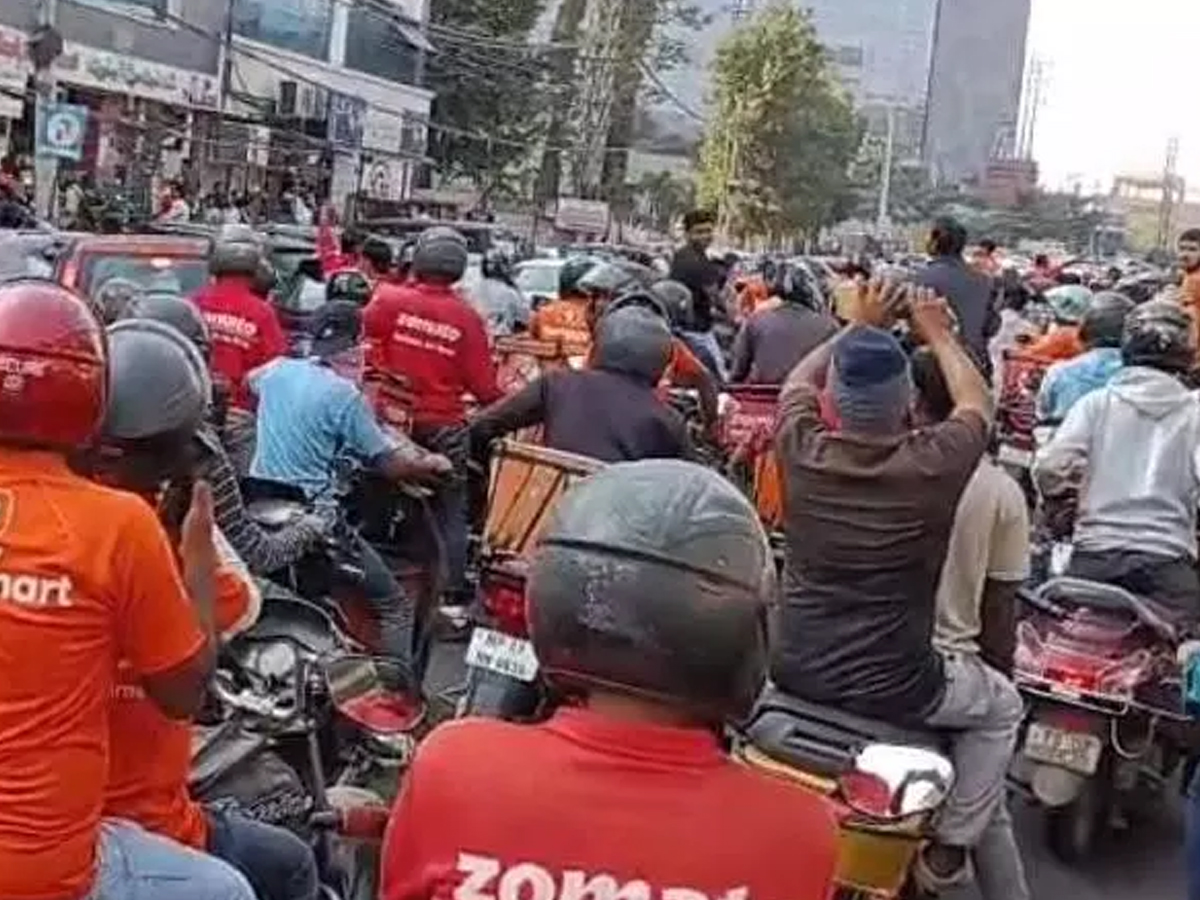
India’s gig economy faced a major disruption on Wednesday, December 31, 2025, as delivery and platform workers from major companies walked out in a nationwide protest. The strike came at one of the busiest times of the year for food, grocery, and online shopping deliveries. Thousands of workers linked to Swiggy, Zomato, Zepto, Amazon, and other apps stayed off the job to press for better pay and safer work conditions.
Why the Gig Worker Strike Happened
Gig workers said they have long raised concerns with companies about unfair work rules, unstable earnings, and unsafe work conditions. They claim that many issues remain unresolved despite repeated appeals. Unions say the current pay systems and delivery expectations have pushed workers to the brink.
Shaik Salauddin, the president of the Telangana Gig and Platform Workers Union (TGPWU), said the strike aims to pressure companies to listen. Workers also want policymakers in New Delhi to take notice of what they say is a deepening crisis in India’s gig economy.
Key Demands of Gig Workers
Unions have outlined several core demands. Many of these reflect long-standing complaints from gig workers across the country.
1. Return to Older Pay Systems
Workers want the payout structure used earlier, which they say ensured more stable and transparent earnings. They argue that recent changes have slashed their income and made daily earnings unpredictable.
2. End to the 10‑Minute Delivery Rule
One of the loudest calls from workers is to scrap the ultra‑fast 10‑minute delivery model. They say this rule forces them to speed, rush, and take risks on the road to meet unrealistic deadlines.
3. Stop Arbitrary Account Blockings
Many gig workers allege that platform apps frequently deactivate or block their accounts without clear reasons or proper explanations, leaving them suddenly without income.
4. Fair Algorithm Use
Workers say platform algorithms affect earnings and incentives in unclear ways, making income unstable. They want transparent rules on how incentives and penalties are calculated.
5. Social Security and Benefits
Gig workers demanded basic protections such as insurance coverage, accident compensation, health benefits, and other welfare measures. None of these are standard for many delivery partners, who are usually treated as independent contractors.
What the Strike Could Mean for Consumers
The nationwide walkout raised concerns about delivery delays, cancellations, or limited services on New Year’s Eve. People planning parties, dinners, grocery runs, or last‑minute shopping online may have found apps slow or empty of available delivery partners.
Some companies responded to the threat of the strike by offering extra pay, bonuses, and rewards to keep delivery partners online on Dec 31 and Jan 1. Platforms like Swiggy and Zomato were reported to be dangling incentives and even lucky draws to encourage workers to stay active during peak hours.
Workers Stand Firm Despite Challenges
Union leaders highlighted that previous attempts to raise issues with platforms yielded little change. Many workers pointed out that days like Dec 31 typically demand long hours with little extra security or compensation.
“This is a peaceful, democratic, and worker‑led strike for fair pay, safety, and dignity,” said Shaik Salauddin, representing workers’ union TGPWU and the Indian Federation of App‑Based Transport Workers (IFAT).
Government and Policy Pressure
Strike organizers also appealed for government action. They want clearer labor protections for gig workers, saying India’s current laws do not adequately cover this growing but vulnerable workforce. Some unions have urged the central government to regulate platform companies under existing labour laws and ensure basic rights.
As the strike unfolded, its real impact varied by region. In some cities, deliveries slowed significantly, while in others, many workers continued to operate. Analysts say the protest highlights deeper structural issues in India’s digital economy and may shape future debates on workers’ rights and platform regulation.