
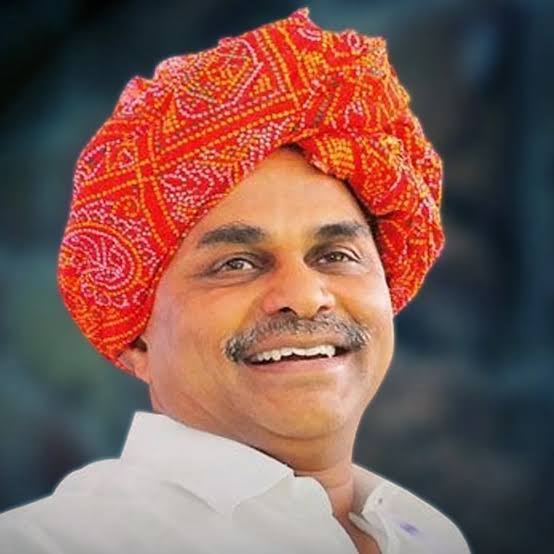
New Delhi, Sept 2
Congress president Mallikarjun Kharge on Wednesday recalled the contribution of former Andhra Pradesh Chief Minister YS Rajasekhar Reddy saying his life was defined by his commitment to the Congress and the poorest people of undivided Andhra Pradesh as also all marginalized people and added that this year’s award is being conferred upon M.S. Swaminathan Research Foundation.
Kharge also said that for the Congress rural India has been a lifelong commitment as a core philosophy of governance — from Indira Gandhi’s land reforms to Rajiv Gandhi’s technology missions, from the historic empowerment of Panchayati Raj to the transformative social-security programmes of the UPA — including the enactment and implementation of the National Food Security Act and the Food for Work initiative under the stewardship of Sonia Gandhi.
Addressing the gathering at the YS Rajasekhar Reddy’s award here, which was conferred to MS Swaminathan Research Foundation, Kharge said, “It gives me immense pleasure that this year’s award is being conferred upon M.S. Swaminathan Research Foundation.
“At the threshold, I wish to say that Rajasekhara Reddy’s life was defined by his commitment to the Congress and the poorest people of undivided Andhra Pradesh as also all marginalized people,” Kharge said, adding that “I express my sincere thanks to the Dr YS Rajasekhara Reddy and Dr KVP Foundation for inviting me today.”
He said that 17 years ago, on this very date, we lost Rajasekhara Reddy — a man who gave his whole life to the Congress party and to the poor of his state. So there could not be any better way of paying tributes to him that in his memory, we are honouring an institution that shares his deepest belief: that no farmer, and no poor family, should be left behind and be deprived of their basic needs.”
Recalling the contributions of the Rajasekhar Reddy, the Congress president said that he did not just hold a party card — he rebuilt the party brick-by-brick in Andhra Pradesh, when it was in dire straits.
“He (Rajasekhar Reddy) walked over 1400 kilometres in the scorching summer heat, listening to people, before he became Chief Minister in 2004, chosen by a popular and fair mandate. Rajasekhara Reddy believed that the purpose of government was to give ordinary people dignity, security and opportunity. Then when he got power, he did not forget what he strove for. He brought healthcare within the reach of poor families through Aarogyasri, built homes for poor families through Indiramma Indlu, worked to give land to the landless, and gave free electricity to farmers while ensuring that farm loan relief reached thousands of families,” the Congress leader said
He also paid tributes to the iconic Dr. M. S. Swaminathan and said that he transformed Indian agriculture, but his vision went way beyond producing more food.
“I had the privilege of knowing Dr. Swaminathan personally for many years. I first came to know him when I was a minister in Karnataka. We invited him to speak to students and faculty as a chief guest for programmes at the University of Agricultural Sciences in Bangalore. I had the opportunity to interact with him on several occasions. I knew him as a great scientist, and later as a nominated Member of Parliament in the Rajya Sabha (2007 to 2013), but what stayed with me was his commitment to science and his belief that scientific knowledge must ultimately improve the lives of ordinary people,” Kharge said.
He also said that in 2024, Dr Swaminathan was conferred upon Bharat Ratna posthumously, the highest award of this country.
“Today, we honour the M.S. Swaminathan Research Foundation, and very rightly so, needless to state Rajasekhara Reddy would have been very happy about this choice. And I think it is also important to recognise the remarkable way in which Dr. Swaminathan’s own family has carried his legacy forward,” he said.
Talking about the climate change challenges, Kharge said, “Today Swaminathan’s work matters more than ever. Climate change is not a distant threat anymore. Our monsoons are less certain, our coasts are more vulnerable, and rural communities face floods, droughts, cyclones and changing weather patterns.
“This can mean much beyond an environmental problem, it could mean a lost crop, a lost livelihood, a child’s education being interrupted, or a family falling into debt. It is not just good science. It is social justice,” the Congress leader said.
Kharge emphasised that rural communities do not need to be remembered only when there is a drought, a flood, a crop failure or an election.
“They deserve a development model that gives them security before the crisis arrives. We need to ask whether our farmers have a fair market, whether rural families have decent livelihoods, whether our women have economic independence, whether our tribal communities have access to technology and opportunity, and whether our villages have the infrastructure and services that allow young people to build a future there. Government has an important role in creating this security, so that the communities become partners in India’s development,” Kharge said.
He also asserted that we need to ask whether our farmers have a fair market, whether rural families have decent livelihoods, whether our women have economic independence, whether our tribal communities have access to technology and opportunity, and whether our villages have the infrastructure and services that allow young people to build a future there.
“Government has an important role in creating this security, so that the communities become partners in India’s development.
Kharge pointed out: “For Congress, rural India has been a lifelong commitment as a core philosophy of governance. From Indira Gandhi’s land reforms to Rajiv Gandhi’s technology missions, from the historic empowerment of Panchayati Raj to the transformative social-security programmes of the UPA — including the enactment and implementation of the National Food Security Act and the Food for Work initiative under the stewardship of Smt. Sonia Gandhi Ji — this commitment has remained at the heart of the Congress’s approach to governance.”