
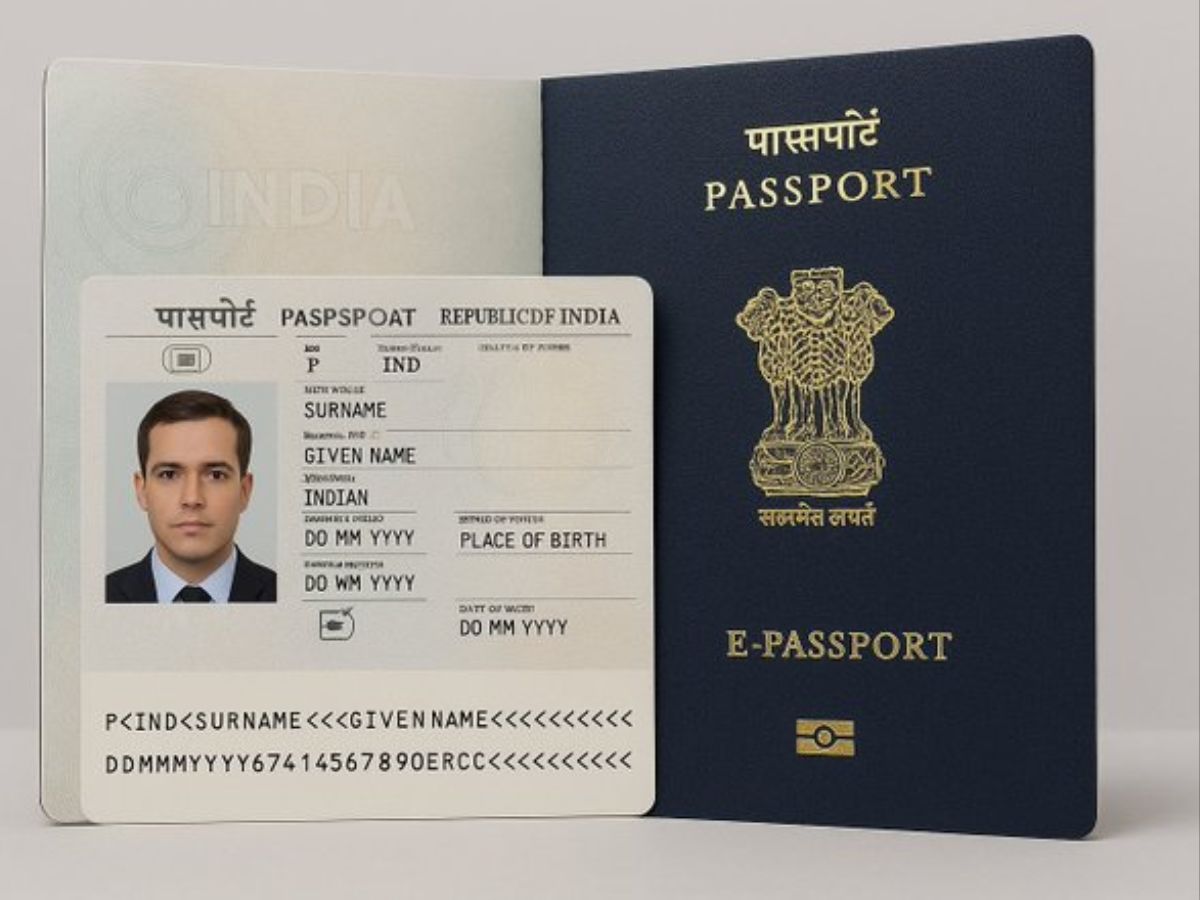
India has just stepped into the future of international travel. The government has officially launched the biometric e‑Passport, a high‑security travel document designed to make immigration smoother, identity verification stronger, and travel more aligned with global standards. The move comes as part of a major update under the revamped passport system, promising benefits for millions of travellers.
What is an e‑Passport?
An e‑Passport, also called a chip-enabled or biometric passport, looks much like a regular passport. But inside its back cover, it carries an embedded RFID chip and antenna. This chip securely stores the holder’s personal and biometric details, photo, fingerprints, digital signature, and other identity data. The chip works under international standards and makes personal data harder to forge or replicate.
Unlike older passports that rely only on printed data, e‑passports add a digital verification layer. At immigration counters, officials can read this data electronically, enabling faster identity checks and stronger security.
Who Can Apply for an e‑Passport?
Any Indian citizen who qualifies for a regular passport can now apply for an e‑passport. The eligibility criteria remain the same as for traditional passports.
However, initially, e‑passports are being issued from select Passport Seva Kendras (PSKs) and Post Office Passport Seva Kendras (POPSKs). Applicants should check whether their local passport office has started issuing e‑passports before applying.
The government has plans to expand the rollout nationwide over the coming months, making e‑passports available for both new applications and renewals.
How to Apply for an e‑Passport?
The application process for an e‑passport mirrors the traditional passport procedure:
- Register or log in on the official Passport Seva portal.
- Fill out the application form online.
- Choose your nearest PSK or POPSK offering e‑passports.
- Pay the applicable application fee online (via UPI/QR codes).
- Book an appointment and visit the passport centre with the required documents. Biometric data (photo, fingerprints) will be captured.
- Once processed, the passport will be printed with the embedded chip and delivered to your registered address.
All new passports issued after May 2025 under the upgraded system will be e‑passports. Existing traditional passports will stay valid until their expiry.
What Are the Benefits of e‑Passports?
- Enhanced security: The embedded chip stores encrypted biometric data, making identity theft, forgery or duplication far harder.
- Faster immigration clearance: At international airports, e‑passports allow for quicker, automated checks via e‑gates — reducing waiting times and enabling smoother border control.
- Global acceptance: Millions of travellers worldwide already use similar biometric passports. With e‑passports, Indian travellers now match international standards.
- Reduced fraud risk: Biometric data and chip-based verification make passports harder to forge or misuse.
- Seamless renewals and upgrades: As rollout expands, renewals and new passport issues will automatically provide the enhanced e‑passport format.
Key Security Upgrades & Global Standards
The e‑passport issued under the updated Passport Seva Programme V2.0 uses a secure RFID chip and an antenna embedded in its back cover. The data stored includes biometric identifiers (photo, fingerprints, iris/facial data) and personal details. The encryption and access controls meet international standards set by the International Civil Aviation Organization (ICAO).
Additionally, the new passport‑issuance system integrates with digital tools: a revamped website and mobile app, simpler digital document uploads, AI-powered chat and voice bots for support, and online payments — all under the upgraded PSP V2.0.
The government aims for all Indian passports to be chipped by 2035, a phased move to ensure secure, frictionless international travel for citizens.
What does This Rollout Mean for Indian Travellers?
For Indian citizens planning to travel abroad — for work, study, tourism, or family — e‑passports promise:
- Faster and smoother immigration at international airports
- Greater acceptance in countries that follow biometric passport norms
- Reduced risk of passport fraud or identity theft
- More reliable document verification and travel security
As the service expands across more Passport Seva Kendras, more citizens can switch to this upgraded travel document at the time of application or renewal.