
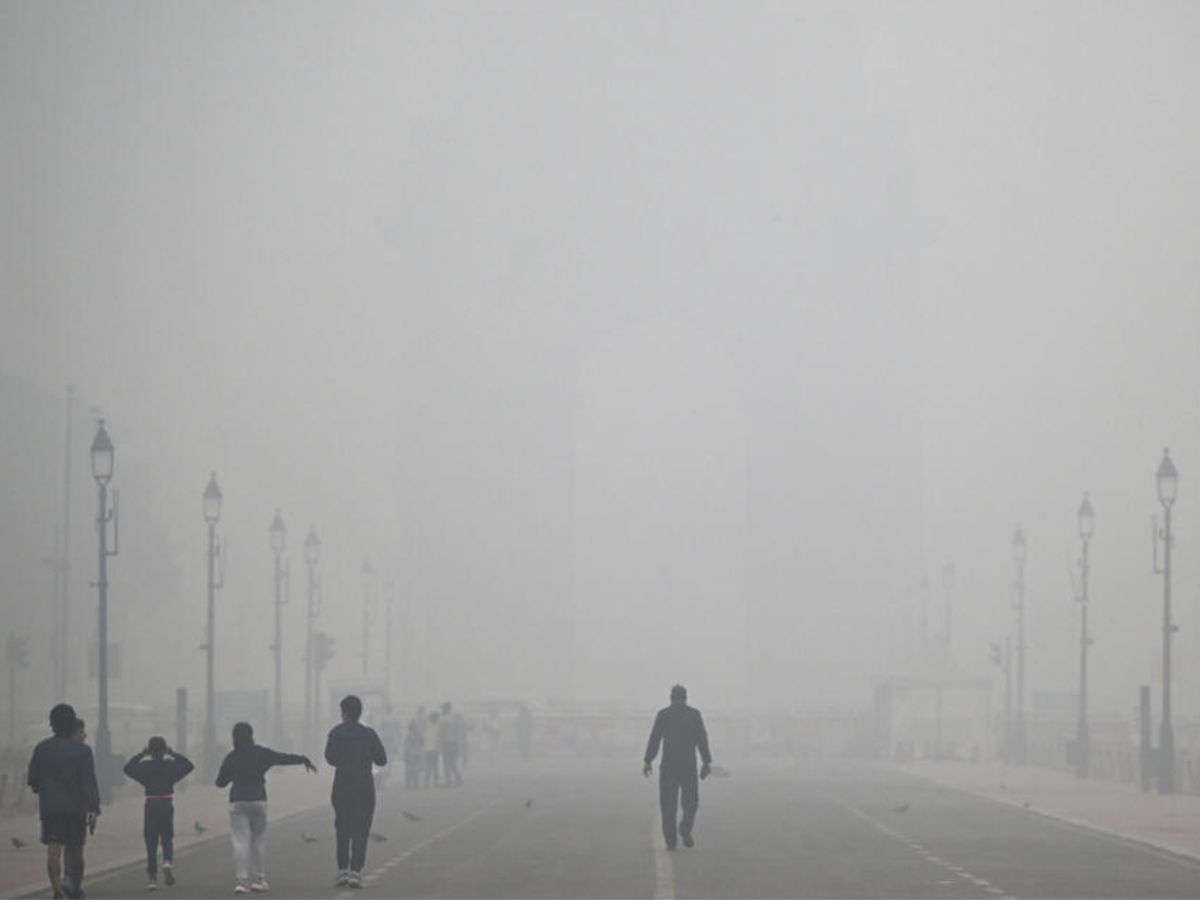
Delhi AQI: Delhi’s air quality has turned “very poor” with the city recording an overall AQI of 397 on early Monday morning. Poor wind speed, falling temperature, and seasonal factors of winter fog have trapped pollutants near the ground, exacerbating the smog situation. Of the 39 monitoring stations in Delhi, 20 recorded their AQI readings above 400, which falls into the “severe” category, while the rest were somewhere between the 300-400 mark.
How bad is the Air Quality in Delhi?
However, not all regions are suffering equally. Places like Vivek Vihar and Rohini recorded some of the worst pollution levels, with AQIs inching close to or surpassing 450. The non-stop poor quality has been going on for over two weeks now, backed by fires in surrounding regions, vehicular emissions, and construction dust.
Health experts warn that this level of pollution is triggering a sharp rise in respiratory and eye-related ailments across the capital. The city has reportedly scaled up pollution control measures to Stage 4 of the Graded Response Action Plan, triggering restrictions aimed at containing sources of pollution quickly.
Did the Protest in Delhi Amidst Smog Turn Violent?
Yes, what started as a peaceful protest at India Gate turned into a chaotic confrontation. Demonstrators demanding urgent action over the capital’s “poisonous” air were removed by police, not before some allegedly deployed chilli pepper spray on officers.
Reports say 3–4 police personnel got sprayed in the face and eyes and had to be treated at a hospital. Legal action is underway against those involved.
Why Did the Protest Amidst Smog in Delhi Turn Tense?
Police claim demonstrators declined to move from the C-Hexagon area, blocking ambulances and holding up medical staff. When police moved to force the barricades, demonstrators resisted and allegedly resorted to using the chilli spray.
Officials later described the use of such spray as “very unusual” and said it was the first time they had encountered it in a crowd control situation of this kind.
What are Protesters in Delhi Demanding?
The protesters ranged from youthful activists to concerned residents, demanding long-term policies that were transparent in nature to deal with air pollution. They feel that sporadic measures like the sprinkling of water and smog guns are insufficient; rather, the authorities must address the root causes like emissions and farm fires.
Others have expressed frustration that, despite repeated warnings, they are still breathing in “poisonous air.”
What’s the Government Doing to Respond?
The city is already operating under Stage 3 GRAP, which imposes stricter curbs on construction and usage of polluting fuels. Besides, anti-smog guns and sprinklers have also been deployed in several parts of the city to settle dust and reduce the buildup of particulates.
At the same time, police have registered cases against protestors for obstructing public services and breaking barricades.
Will This Crisis Ease Soon?
According to meteorologists and pollution-monitoring bodies, unless there is a change in the weather with stronger winds or rain, Delhi’s air quality may remain hazardous for several more days.
Meanwhile, residents, health experts and activists are demanding more concrete action on behalf of the government.
The Delhi smog crisis has now become more than an environmental problem; it is turning into a flashpoint of public health and political accountability amidst increasing tensions between civic authorities and protesters.