
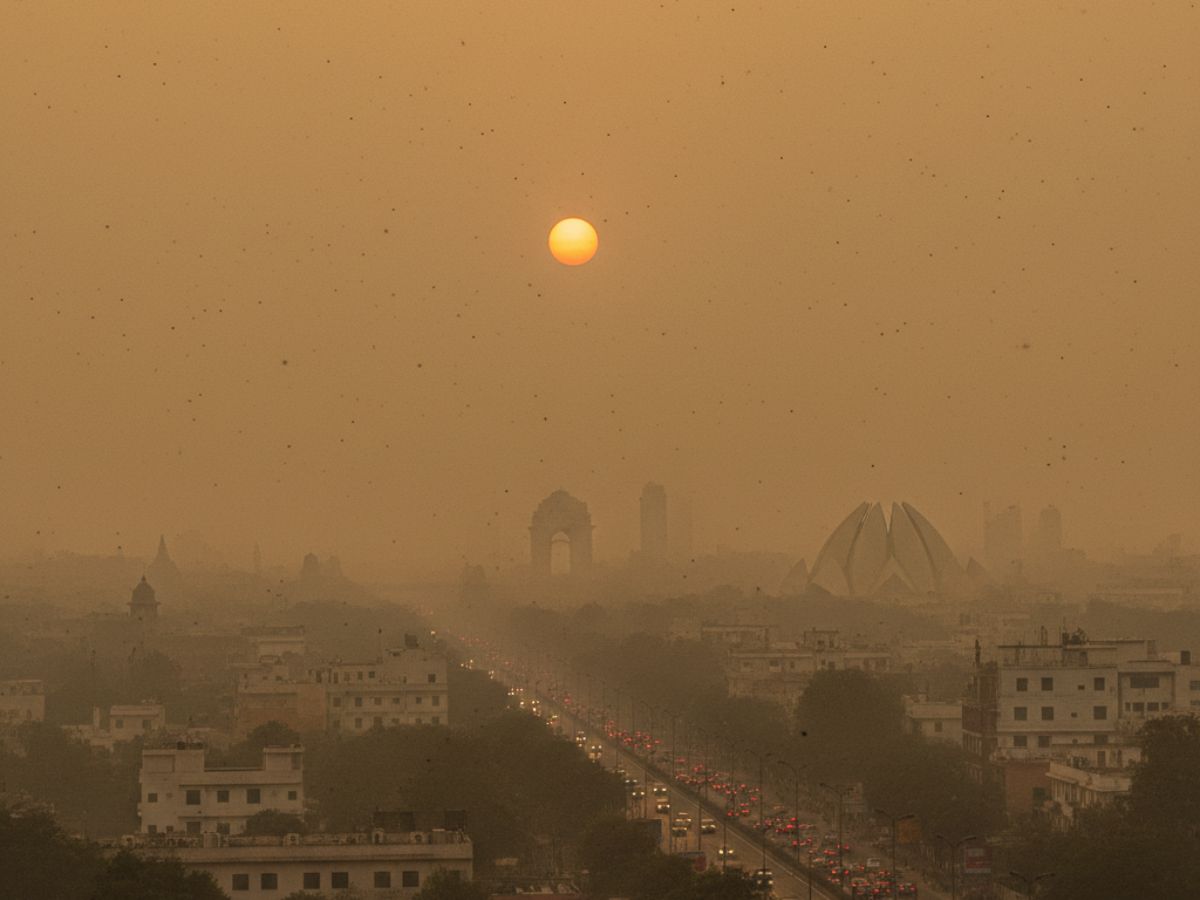
Delhi AQI: The minimum temperature on Monday recorded at 10.4 °C, nearly 4 °C below the November average, was this season’s coldest morning in Delhi.
According to weather forecasters, clear skies and dry north-westerly winds from the Himalayas caused rapid overnight cooling, marking one of the steepest drops in early November this year.
Temperatures dropped drastically from 19.4 °C on November 1 to 10.4 °C by November 10. The chill is expected to continue, according to forecasts, with morning mist, haze, and shallow fog for the next couple of days.
How Bad Is Delhi’s Air Right Now?
Meanwhile, the average AQI of Delhi reached 362, firmly positioning it in the category of “Very Poor”.
Some areas, including Bawana and Wazirpur, recorded AQIs close to 400, entering the “Severe” range.
Experts caution that prolonged exposure to such air can cause respiratory discomfort, especially among children, elderly people, and those with pre-existing conditions.
Is GRAP Stage III Required Yet?
Despite the high pollution, authorities decided not to invoke Stage III of the Graded Response Action Plan (GRAP).
Stage III restrictions kick in when AQI crosses 401 450 and typically include construction bans, school closures, and strict vehicle curbs.
Officials said there had been a temporary improving trend, with the situation possibly stabilising later in the day.
What’s Causing This Pollution Spike in Delhi?
Several factors are at play:
- Early winter has reduced the atmospheric dispersion, trapping pollutants close to the ground.
- Low wind speeds and overnight temperature inversion layers prevent the dispersion of pollutants.
- Although stubble-burning in neighbouring states declined sharply compared to last year, local emissions from traffic, industry and construction remain high.
How Can The Residents of Delhi Protect Themselves?
Health experts warn of limiting one’s outdoor exposure, particularly for vulnerable groups.
Pollution masks will be worn-N95/FFP2, air purifiers used indoors, and warm clothing will help reduce risks from both cold and toxic air.
It is very important to monitor symptoms such as a cough or difficulty breathing during this time.
In short, Delhi is facing a double challenge-an unusually early winter chill coupled with very poor air quality.
With minimum temperatures below 11 °C and AQI hovering near 360, the residents must take precautions to remain safe while the city navigates this early season health and pollution crisis.