
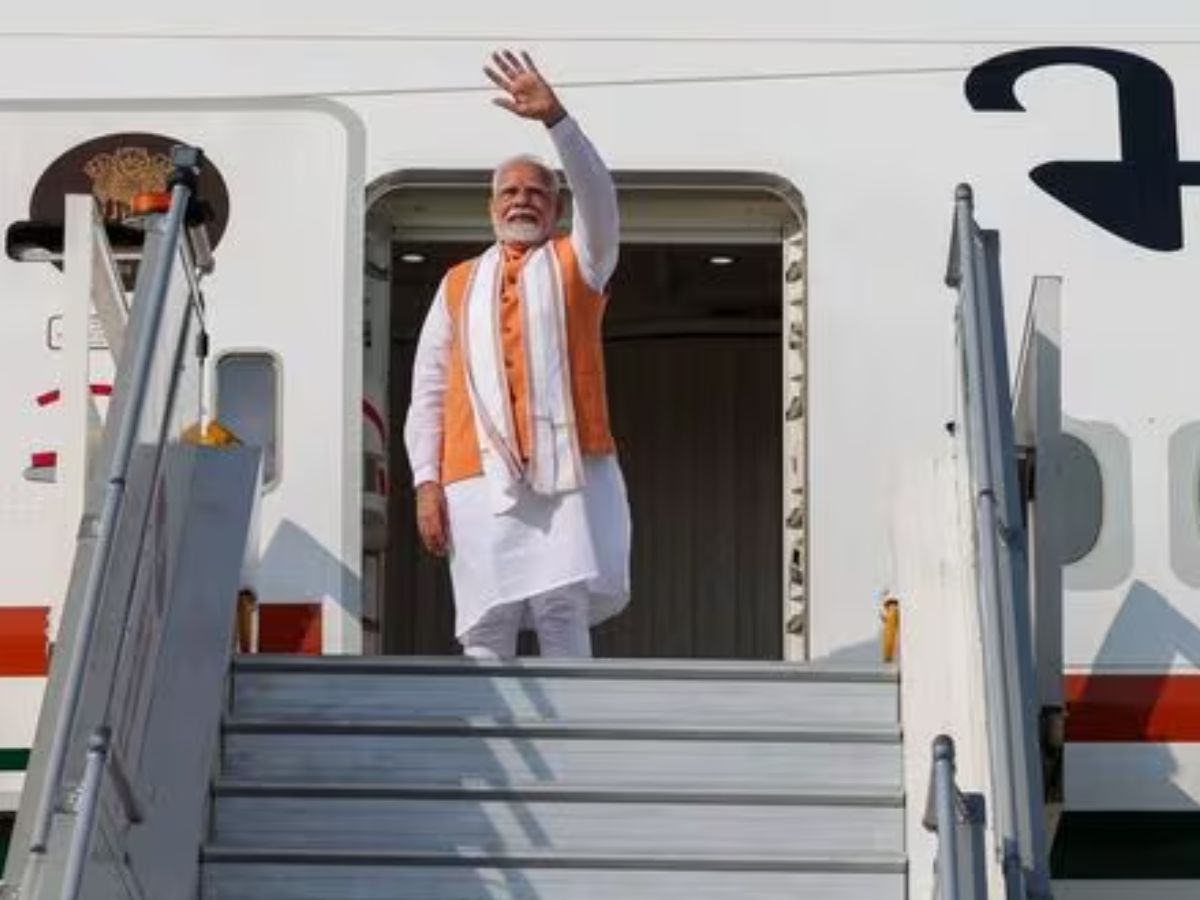
Prime Minister Narendra Modi is currently in Japan on a two-day official visit, where he has hailed Tokyo as a “key development partner of India.” His schedule this year also includes a forthcoming trip to China for the SCO Summit, where he will meet President Xi Jinping and Russian President Vladimir Putin. These back-to-back engagements underline India’s growing role in balancing partnerships across Asia.
2025 has, in fact, been one of the most crucial years for India’s diplomacy. At a time when the world faces shifting power equations, economic uncertainty, and regional conflicts, Modi’s foreign tours have projected India as a bridge-builder and a balancing power. Each visit this year has not only carried symbolic value but also resulted in tangible achievements from trade agreements to defense partnerships, from energy security to leadership roles in global forums.
Unlike previous years, 2025 saw Modi embark on a series of high-impact foreign tours, each tied to a strategic vision strengthening trade, securing energy, deepening defense ties, and asserting India’s voice in multilateral forums. These visits were not just ceremonial; they resulted in landmark agreements, new partnerships, and global recognition that have redefined India’s standing on the world stage.
From signing a historic Free Trade Agreement with the United Kingdom, to securing leadership space in BRICS and BIMSTEC, to reinforcing India’s presence in the Indian Ocean and Latin America, Modi’s diplomacy has delivered on multiple fronts. His engagements reflect India’s rise as a trusted partner, a global growth engine, and a strategic counterbalance in an increasingly polarized world order.
Also Read: Trade War Twist: Will Trump’s Tariffs Backfire on the US Economy?
1. France and the United States – February 2025
France (Paris & Marseille)
-
PM Modi co-chaired the 3rd Artificial Intelligence Action Summit with French President Emmanuel Macron. Both leaders stressed ethical use of AI and announced joint projects in defense, clean energy, and digital innovation.
-
He inaugurated India’s new consulate in Marseille, strengthening India’s outreach to Europe.
-
Modi visited the ITER nuclear fusion facility, where India is a key partner, highlighting India’s contribution to advanced energy research.
United States (Washington D.C.)
-
Modi met President Donald Trump, becoming the fourth world leader to visit Trump in his second term.
-
Both sides launched “Mission 500”, a roadmap to raise bilateral trade to $500 billion by 2030.
-
India and the U.S. signed a 10-year defense cooperation framework, expanding joint military exercises and technology sharing.
-
India committed to purchasing more U.S. oil and gas, diversifying its energy basket while reducing dependency on Russia and the Middle East.
Impact: This visit underlined India’s balancing act—deepening ties with Western powers while keeping strategic autonomy.
2. Mauritius – March 2025
PM Modi was invited as the chief guest at Mauritius’s National Day celebrations.
-
India and Mauritius signed multiple MoUs, covering maritime security, financial crime prevention, water infrastructure funding, and capacity building.
-
Modi announced new grants and lines of credit for development projects.
-
He was conferred with Mauritius’s highest civilian honour, Grand Commander of the Order of the Star and Key of the Indian Ocean (GCSK).
Impact: The visit reaffirmed India’s central role in the Indian Ocean, where maritime competition with China is intensifying.
3. Thailand – April 2025 (BIMSTEC Summit)
PM Modi attended the 6th BIMSTEC (Bay of Bengal Initiative for Multi-Sectoral Technical and Economic Cooperation) Summit in Bangkok.
-
India and Thailand upgraded their relationship to a Strategic Partnership.
-
Modi addressed the Thai Parliament, highlighting India’s commitment to strengthening Asia-Pacific cooperation.
-
He also connected with the Indian diaspora, reinforcing cultural and economic links.
Impact: The summit boosted India’s “Act East Policy” and cemented New Delhi’s leadership role in the BIMSTEC grouping.
4. Argentina and Brazil – July 2025 (BRICS Summit)
Argentina (Buenos Aires)
-
Modi became the first Indian PM to visit Argentina since 1968.
-
He met President Javier Milei and signed agreements on energy, mining, agriculture, and fintech cooperation.
-
Modi addressed the Indian diaspora in Couva, emphasizing India’s cultural bonds with the Latin American region.
-
He received the Key to Buenos Aires City as a symbol of friendship.
Brazil (Rio de Janeiro)
-
Modi attended the 17th BRICS Summit, where he championed the Global South’s call for reforming global financial institutions.
-
He received Brazil’s highest civilian award for foreign dignitaries – the Grand Collar of the National Order of the Southern Cross from President Lula da Silva.
-
His tribute to Mahatma Gandhi and Rabindranath Tagore during the visit resonated widely with Brazilian citizens.
Impact: Modi’s South America tour strengthened India’s presence in Latin America and reinforced BRICS as a counterweight to Western blocs.
5. United Kingdom and Maldives – July 2025
United Kingdom (London)
-
Modi’s state visit led to the signing of a landmark India–UK Free Trade Agreement (FTA).
-
99% of Indian exports gained tariff-free access to the UK.
-
British exports received phased tariff reductions in India.
-
Provisions included easier work visas, recognition of qualifications, and cooperation in AI, health, and defence.
-
-
A “Vision 2035” roadmap was also launched to guide bilateral ties for the next decade.
Maldives (Male)
-
Modi was the guest of honour at the Maldives’ 60th Independence Day celebrations.
-
India extended a $565 million line of credit for infrastructure and defence modernization.
-
Both countries signed agreements in fisheries, tourism, healthcare, and digital technology.
-
Negotiations began for a potential India–Maldives Free Trade Agreement.
Impact: While the UK deal strengthened India’s trade with Europe, the Maldives visit underscored New Delhi’s commitment to its neighbourhood, countering China’s growing influence in the Indian Ocean.
Summary Table of PM Modi’s Key Overseas Visits in 2025
| Country / Event | Date | Key Achievements |
|---|---|---|
| France & USA | Feb 10–15 | AI Summit, defense pact, Mission 500, energy imports |
| Mauritius | Mar 11–12 | National Day guest, MoUs, top civilian award |
| Thailand (BIMSTEC Summit) | Apr 3–4 | Strategic partnership, regional leadership |
| Argentina & Brazil (BRICS) | Jul 4–8 | First visit to Argentina since 1968, BRICS Summit, top honours |
| UK & Maldives | Jul 23–26 | India–UK FTA, Vision 2035, Maldives credit line & FTAs |
PM Modi’s overseas visits in 2025 have been historic, not just for the agreements signed but for the symbolism they carried. From the AI-driven future with France to trade expansion with the UK, and from BRICS solidarity in Brazil to strengthening island partnerships in Mauritius and Maldives, India has positioned itself as a bridge between the West and the Global South.
Also Read: PM Modi in Japan: Calls Tokyo a vital partner, urges greater investments in India