
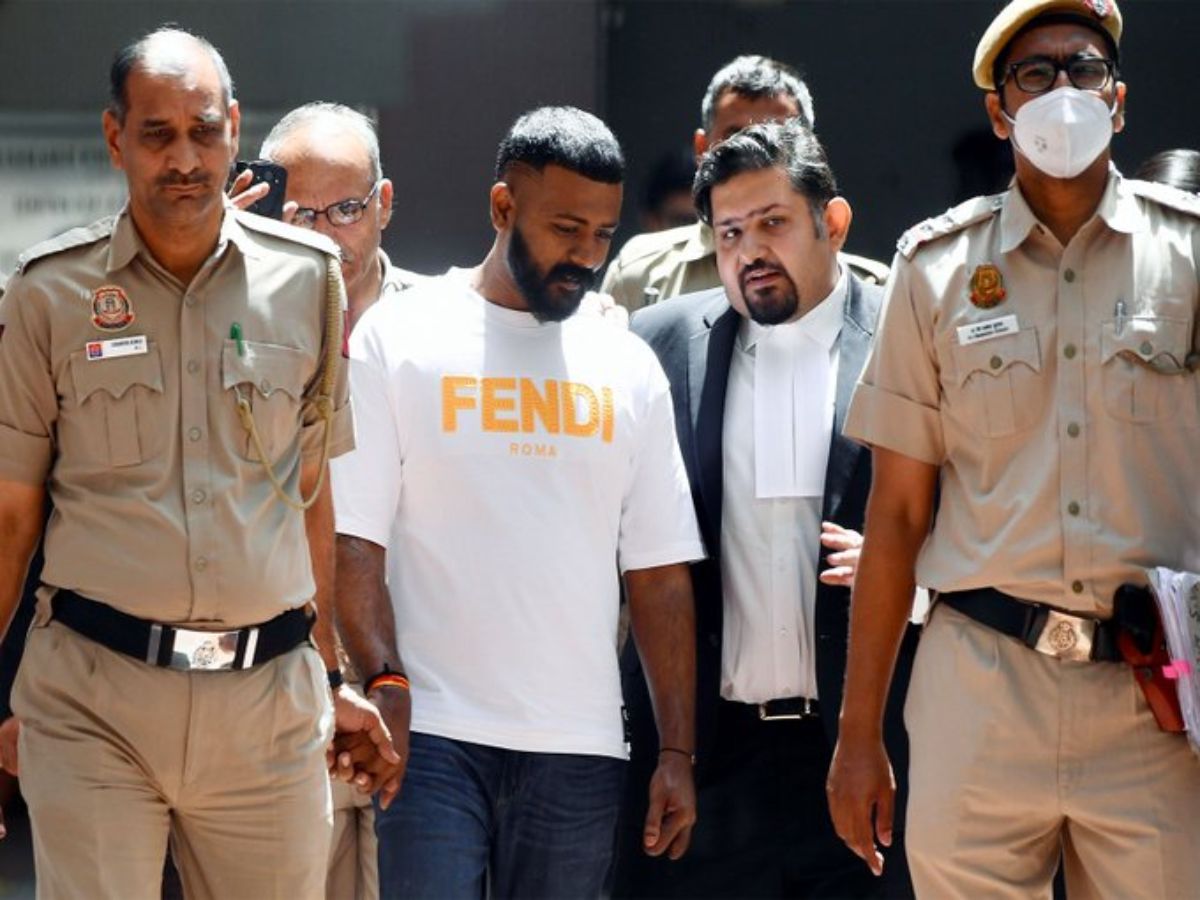
From jail to the courtroom, conman Sukesh Chandrasekhar has made a fresh legal move. He has offered a massive monetary settlement in the high-profile ₹200 crore extortion case, signalling a possible shift in strategy as multiple investigations against him continue across the country.
Who is Sukesh Chandrasekhar?
Sukesh Chandrasekhar is a jailed conman facing multiple criminal cases across India. He is accused of carrying out large-scale extortion and money laundering by impersonating influential figures and using fake identities. Delhi Police has alleged that he operated through hawala channels and shell companies to hide and move illicit funds.
He is currently in judicial custody and is also under investigation by the Enforcement Directorate under the Prevention of Money Laundering Act, with the Maharashtra Control of Organised Crime Act invoked against him.
What is the Sukesh Chandrasekhar Settlement Offer?
Sukesh Chandrasekhar has approached the Patiala House Courts in Delhi, offering to pay ₹217 crore (about $24.16 million) to the complainant, Aditi Singh. The offer relates to the ₹200 crore extortion case registered by the Delhi Police Special Cell.
The application was placed before Additional Sessions Judge Prashant Sharma and is scheduled for consideration on January 3, 2026.
Why Did Sukesh Chandrasekhar Approach the Court?
Chandrasekhar filed the plea through his lawyer, Anant Malik. He requested the court’s permission to allow both parties to explore a settlement linked to the FIR registered at Lodhi Colony Police Station.
The application clearly states that the offer is made “without prejudice” and does not amount to an admission of guilt. Chandrasekhar has also urged the court to issue notice to the complainant and formally record that the proposal is genuine and dependent on her consent.
What is the ₹200 Crore Extortion Case About?
Delhi Police has accused Sukesh Chandrasekhar of cheating and extorting money from the wives of former Ranbaxy promoters, Shivinder Singh and Malvinder Singh. Investigators allege that Chandrasekhar falsely posed as influential individuals to gain trust and extract money.
The police arrested Chandrasekhar along with his associate, A Paulose, in the case. Authorities say the alleged crime involved a well-planned network and large financial transactions.
Money Laundering and Organised Crime Charges
The legal trouble does not end with extortion. Chandrasekhar and his associate are also facing proceedings under the Prevention of Money Laundering Act (PMLA). The Enforcement Directorate (ED) is investigating the alleged laundering of funds.
Delhi Police has also invoked the Maharashtra Control of Organised Crime Act (MCOCA), indicating that investigators believe the operation involved organised criminal activity. According to police claims, the accused used hawala routes and shell companies to hide and layer the proceeds of crime across different locations.
New Legal Strategy?
Legal experts see the settlement offer as a strategic move rather than a sign of closure. By proposing a higher amount than the alleged extortion sum, Chandrasekhar may be attempting to show cooperation while keeping his legal defences intact.
However, the court has not passed any order on the application so far. The settlement can move forward only if the complainant agrees and the court finds it legally acceptable.
What Happens Next?
The court will review the application on the scheduled date. It will decide whether to allow discussions on settlement and issue notice to the complainant.
Even if a settlement progresses, Chandrasekhar may still face prosecution in other cases linked to money laundering and organised crime.
Why This Case Matters?
The case highlights how financial crimes, organised networks, and high-value settlements intersect in India’s legal system. It also raises questions about whether monetary settlements can resolve cases involving serious economic offences.
For now, all eyes remain on the court as it weighs whether Sukesh Chandrasekhar’s ₹217 crore offer will change the course of one of India’s most talked-about extortion cases.