
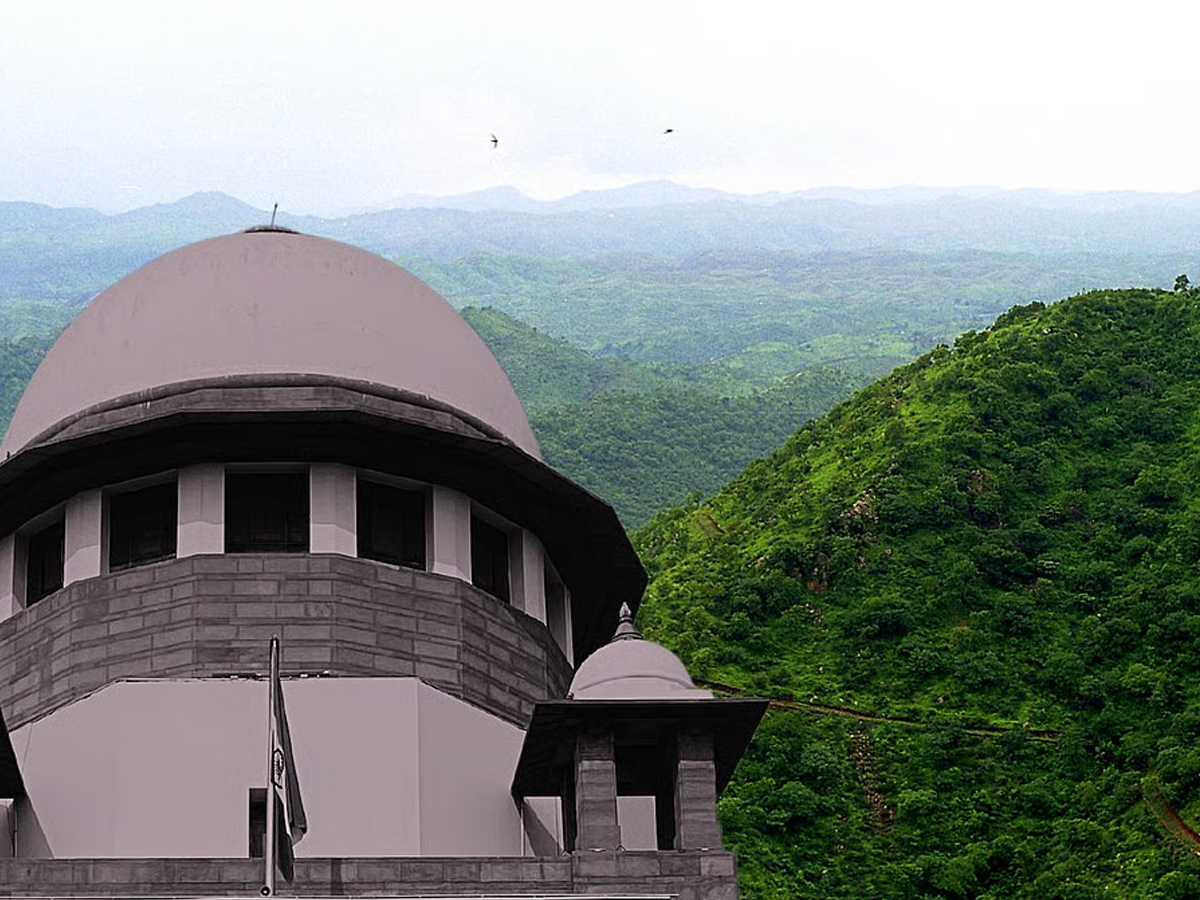
The Union government has tightened environmental protection across the Aravalli hills by stopping all new mining leases. The decision applies to the entire mountain range, cutting across Delhi, Haryana, Rajasthan, and Gujarat. The move follows legal directions and rising concern over damage caused by mining in one of India’s most fragile ecological zones.
Centre Orders Complete Halt on New Mining Leases
The Ministry of Environment, Forest and Climate Change (MoEF&CC) has directed all states to stop granting new mining leases in the Aravallis. The order covers the full landscape of the ancient hill system.
“In a major step towards conservation and protection of the entire Aravalli range stretching from Delhi to Gujarat from illegal mining, the Union Ministry of Environment, Forest and Climate Change (MoEF&CC) has issued directions to the states for a complete ban on the grant of any new mining leases in the Aravallis,” MoEF&CC said in a statement.
The government said the ban will help protect the natural structure and continuity of the Aravalli range.
Why the Aravalli Range Needs Protection
The Aravallis act as a natural barrier against the spread of the Thar Desert. They support forests, wildlife, and groundwater recharge, especially in the National Capital Region.
Unregulated mining has damaged large parts of the hills over the years. The government said the new directions aim to stop such activity and protect the range as a single geological system stretching from Gujarat to Delhi.
Supreme Court’s Role in the Decision
The latest move follows a Supreme Court order issued on November 20 in the ongoing TN Godavarman Thirumulpad vs Union of India case.
The court accepted a uniform scientific definition of the Aravalli hills proposed by a MoEF&CC-led committee. At the same time, it clearly stated,
“Till the MPSM [Management Plan for Sustainable Mining] is finalised by the MoEF&CC through Indian Council of Forestry Research and Education (ICFRE), no new mining leases should be granted.”
The court stressed the need for a science-based and sustainable mining policy.
Role of ICFRE and Sustainable Mining Plan
The government has asked the Indian Council of Forestry Research and Education (ICFRE) to identify additional zones across the Aravallis where mining should remain prohibited.
This review will go beyond areas already restricted by the Centre. Authorities will base decisions on ecological value, geology, and landscape-level impact.
The final Management Plan for Sustainable Mining will guide future decisions.
What Happens to Existing Mines
The ban applies only to new mining leases. Existing mines can continue operations but only under strict conditions.
The Centre has told state governments to ensure full compliance with environmental safeguards. All operations must follow Supreme Court directions and sustainability norms.
Officials said violations will not be tolerated.
Public Concerns and Misinformation
The announcement comes amid public debate over the new definition of Aravalli hills. Some groups claimed the definition could open large areas to mining.
Environmentalists and Opposition parties argued that smaller hillocks play a key role in ecological balance. The government, however, said the ban on new leases proves its commitment to conservation.
The Centre also warned against misinformation and said protections remain firmly in place.
Why This Decision Matters
The Aravallis are among the oldest mountain systems in the world. Their protection affects climate resilience, water security, and biodiversity across northwestern India.
By freezing new mining and planning long-term sustainability, the government aims to strike a balance between development and environmental safety.