
India has one of the world’s youngest populations, but converting this demographic advantage into meaningful employment remains a significant challenge. While millions of young people complete school and college every year, many enter the workforce without adequate career awareness, workplace exposure or an understanding of what employers expect.
The issue is not limited to the availability of jobs. It also lies in the weak transition between education and employment. Students may earn degrees but still struggle to identify suitable career paths, communicate their capabilities, navigate recruitment platforms or prepare effectively for interviews. For first-generation job seekers and young people from underserved communities, this gap is often wider because access to mentors, professional networks and career guidance is limited.
Addressing this challenge requires support at every stage of the journey: building foundational skills in school, creating exposure to the world of work, and helping young people navigate the hiring process once they are ready to begin their careers.
The gap begins in the classroom
The education-to-employment gap is often discussed only when students reach college or begin applying for jobs. However, its foundations are laid much earlier. As industries evolve and roles change rapidly, schools need to prepare children not only to learn established subjects, but also to think independently, ask questions and adapt to unfamiliar situations.
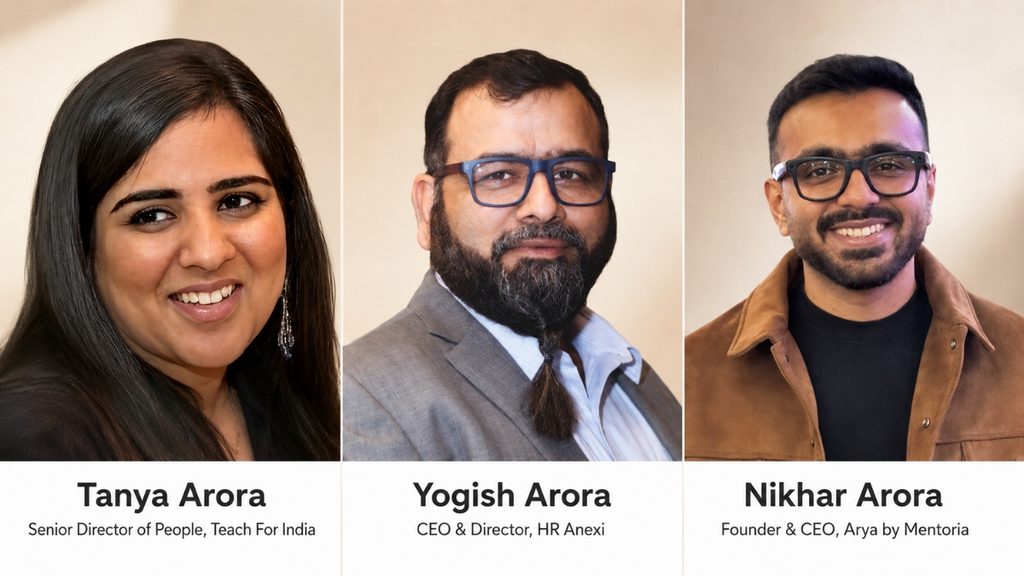
Tanya Arora, Senior Director of People at Teach For India, says: “For decades, schools have optimised for the syllabus and the exam, preparing children for a predictable set of careers. That world is gone. Content still matters, but it isn’t enough on its own. What determines whether a child is truly prepared is whether they’ve learned to think, question and act when the answer isn’t in the textbook.
For Students from underserved communities, this gap is sharper. Without family or networks in formal professional environments, their aspirations are often shaped by the opportunities they see around them, not by their actual potential. Teachers can bridge this, but not alone. They need career counsellors, industry professionals, Alumni and community organisations to bring classroom learning into contact with the real world.
At Teach For India, we’ve learned that you cannot build a curious, courageous, critically thinking young person as a side project. It has to be the work itself. Our Fellows weave the 8 Cs — Critical Thinking, Creativity, Curiosity, Courage, Communication, Collaboration, Compassion, and Consciousness into how every lesson is planned and every Student is taught to see the world.
The goal isn’t to prepare Students for one job, especially as roles keep evolving. It’s to give them the confidence to keep learning, adapt to change, and make their own informed choices.”
This is particularly important for students who may not have access to professionals in their immediate circle. Early exposure to different industries, mentors, alumni, and real-world career conversations can broaden aspirations and help young people see a path that is shaped by their potential rather than by the opportunities immediately visible around them.
A degree does not always provide career direction
Even after completing higher education, many young people remain uncertain about which roles align with their interests, abilities, and qualifications. They may apply to a large number of vacancies without fully understanding the job requirements or tailoring their applications to specific roles.
This creates a mismatch on both sides. Employers receive high volumes of unsuitable applications, while capable candidates may miss interview opportunities because they do not know how to present their experience and skills effectively. For first-generation graduates in particular, employability is not only about earning a degree or possessing technical knowledge. It is also about knowing how to create a CV, approach employers, use job platforms strategically and follow up after applying.
Technology can help close part of this access gap by making job-search support more accessible and personalised.
Nikhar Arora, Founder & CEO, Arya by Mentoria, says: “India’s education-to-employment gap is rarely about qualifications. Ask any young job seeker why they’re not getting interview calls, and most will blame their resume. The real answer is usually simpler: their application never reached a human being.
Every year, more first-generation graduates enter India’s workforce without access to professional networks or informed career guidance. They finish their education without a clear sense of which roles fit them, what recruiters actually screen for, or why a strong CV can vanish into an applicant tracking system without a trace. This isn’t a skills problem. It’s a visibility problem, and it’s a big part of why the gap between education and employment keeps widening.
So can AI actually find jobs for you, rather than just help you write about them? Increasingly, yes, and this is exactly where preparing young people for the future of work has to start. Instead of a candidate manually refreshing five job portals and rewriting the same CV for each application, AI can scan opportunities daily, match them to a candidate’s profile, tailor each application to the specific role, and follow up automatically. AI can find the right roles for a candidate faster than doing it manually ever could, and that shift is what turns a search into interview calls.”
Mr. Nikhar Arora is clear about where AI’s role ends: “AI can find the right roles for you and get you noticed faster than doing it manually ever could. What it cannot do is walk into the interview for you. Communication, problem-solving, how you carry yourself under pressure- none of that is automatable. AI changes whether you get the chance. What you do with it is still yours.”
AI can simplify repetitive tasks such as job discovery, application customisation and follow-ups. However, it cannot replace preparation, confidence, communication or the ability to demonstrate capability in an interview. Candidates must use the time and access that technology creates to develop the skills that remain uniquely human.
Employers have a role in building workplace readiness
The transition from education to employment cannot be the responsibility of schools and colleges alone. Employers also need to recognise that fresh talent may require structured support to understand workplace expectations and develop confidence in their early months.
Yogish Arora, CEO & Director, HR Anexi, says: “Most young candidates I meet already know more than their first job asks of them on paper. Where they struggle is quieter: speaking up in a room full of seniors, or carrying a task to the end without someone standing over them. That kind of readiness is learnable, but it does not arrive on its own. In our work with family businesses, the promoters who hire young people well are the ones who stop treating it as the college’s job. They build a proper internship and put one manager on the outcome, someone genuinely accountable for how the person turns out, rather than a setup where everyone assumes another person is watching. The first months they run as training, not as a test the new hire is quietly failing. When I advise on a junior hire, I tell the promoter to weigh how quickly someone learns above what they have already done, because prior exposure dates faster than most people expect”
Structured internships, clear ownership and supportive managers can help young professionals translate academic knowledge into practical workplace capability. At the entry level, learning agility, ownership and the ability to adapt often matter as much as prior exposure.
Building a connected pathway from classrooms to careers
No single institution or technology can solve India’s education-to-employment challenge. Schools can build foundational capabilities, but students also need career exposure. Colleges can provide qualifications, but these must remain connected to evolving workplace requirements. Employers can create accessible entry-level opportunities and structured learning environments. Technology can simplify job discovery, but candidates still require relevant skills, confidence and human guidance.
A stronger pathway will require collaboration among schools, higher-education institutions, employers, career-guidance organisations, technology platforms and civil-society groups. India’s young people do not merely need more job listings. They need the awareness to choose suitable careers, the skills to remain relevant and the tools to navigate an increasingly complex employment landscape.
Bridging the education-to-employment gap ultimately means ensuring that a young person’s career prospects are shaped by their abilities and aspirations—not by their socioeconomic background, access to networks, or familiarity with the recruitment system.
(The article has been published through a syndicated feed. Except for the headline, the content has been published verbatim. Liability lies with original publisher.)