
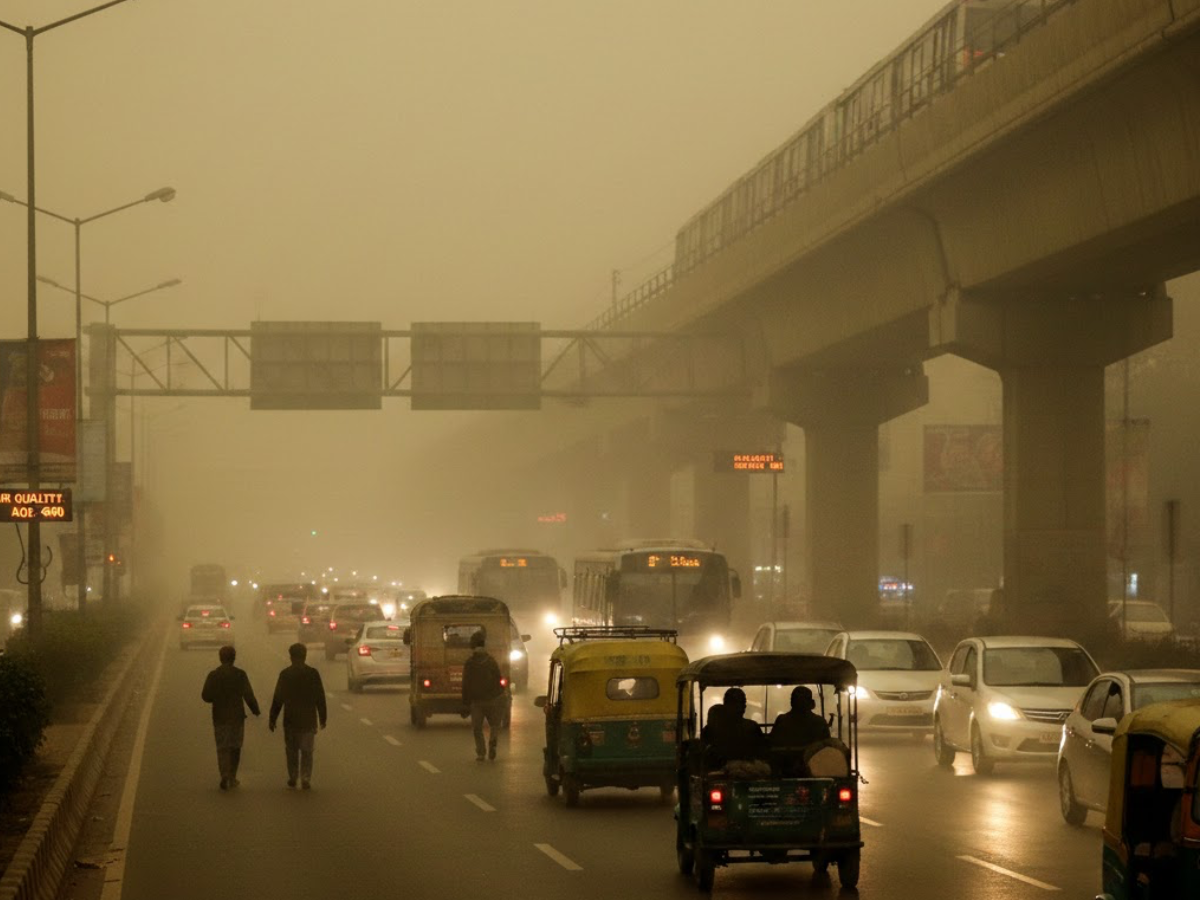
Delhi AQI Alert: In Delhi a dense layer of fog merged with toxic smog, blurring skylines and slowing life across the city. A routine weekday commute turned into a cautious crawl, as visibility dropped sharply and air quality slipped deeper into the danger zone. It highlighted Delhi’s winter struggle with pollution and weather extremes.
Smog Takes Over City Roads
From central Delhi to its satellite cities, the fog arrived thick and early. Areas such as Akshardham, Chandni Chowk, Indirapuram and Noida’s Botanical Garden were wrapped in grey, swallowing roads and residential blocks.
Vehicles moved at a snail’s pace, headlights glowing faintly through the haze. Morning walkers stayed indoors, while office goers braced for delays. The fog was not just a visual barrier but a reminder of how fragile daily movement becomes when weather and pollution collide.
Delhi Air Quality Slips Into Severe Zone
Alongside poor visibility came alarming pollution levels. Data from the Central Pollution Control Board showed Delhi’s overall Air Quality Index at 384 by early morning, placing it on the edge of the severe category and several hotspots crossed that line entirely.
Anand Vihar recorded a worrying 452 while ITO, RK Puram, Chandni Chowk and Dwarka Sector 8 all reported readings well above 400. Even areas considered relatively cleaner, such as IGI Airport and Najafgarh remained firmly in the very poor range, far from safe for prolonged exposure.
| Location | AQI Reading | Category |
|---|---|---|
| Anand Vihar | 452 | Severe |
| ITO | 426 | Severe |
| RK Puram | 411 | Severe |
| Chandni Chowk | 419 | Severe |
| Dwarka Sector 8 | 414 | Severe |
| IGI Airport (T3) | 334 | Very Poor |
| Najafgarh | 331 | Very Poor |
| Aya Nagar | 321 | Very Poor |
| Overall Delhi (7 am) | 384 | Very Poor to Severe |
ALSO READ: Rajnath Singh to Hoist Flag at Maa Annapurna Temple in Ayodhya
Flights Delayed Under Low Visibility Rules
Air travel was among the worst affected. With visibility dropping to critical levels, flight operations at Indira Gandhi International Airport were shifted to CAT III protocols, used only in extreme fog conditions. This resulted in delays and cancellations across several routes.
Airport authorities issued advisories warning passengers of disruptions and deployed additional ground staff to manage crowds and assist stranded travellers. While operations continued, patience became essential for anyone flying in or out of the capital.
Trains Slow Down & Commuters Bear the Brunt
Rail services were not spared either. Several long-distance and suburban trains ran behind schedule as drivers reduced speed to navigate safely through fog-covered tracks. For thousands of passengers, the combination of late trains, choked roads and polluted air turned the morning into a test of endurance. As the year closed, Delhi once again found itself grappling with the familiar winter crisis of fog, smog and stalled movement.
Disclaimer: Air quality readings and travel advisories are subject to change based on weather conditions and official updates from authorities.