
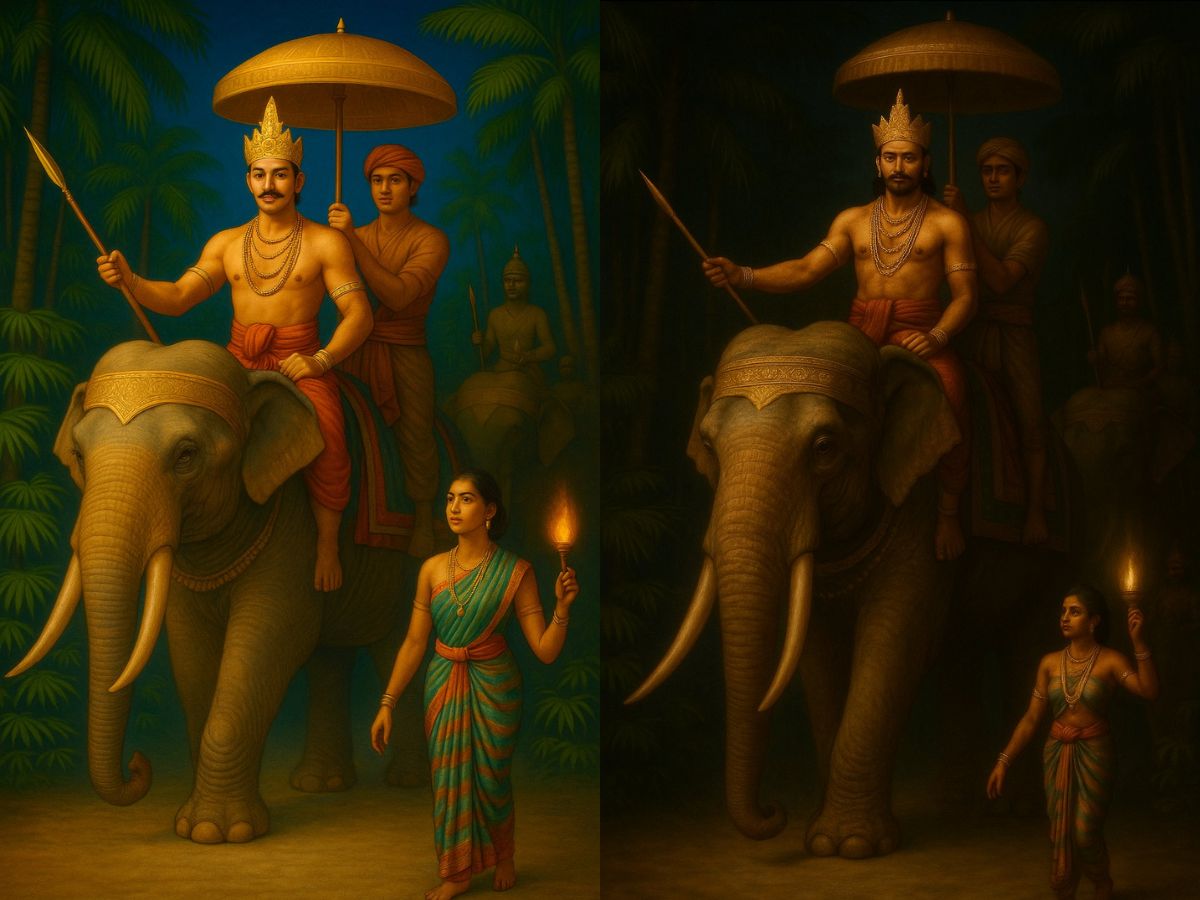
Ajatashatru, who ruled Magadha from 492 BCE to 460 BCE, was one of the most powerful kings of the Haryanka dynasty. His reign was marked by conquests, military innovations, and religious patronage. By defeating powerful neighbors and expanding Magadha’s territory, he laid the foundation for the rise of future Indian empires.
Ajatashatru was the son of King Bimbisara and Queen Chellana, a Licchavi princess. His path to the throne was dramatic and controversial. Around 492 BCE, he overthrew his father and took control of the kingdom. Some Buddhist and Jain texts accuse him of patricide, though details vary. Despite this violent beginning, Ajatashatru proved to be an ambitious and strategic ruler.
One of Ajatashatru’s earliest challenges came from Kosala, ruled by his maternal uncle King Prasenajit. The two fought over the control of Kashi, a fertile and economically important region. The conflict lasted for years but ended peacefully when Prasenajit married his daughter to Ajatashatru and offered Kashi as dowry. This strengthened Magadha’s position and secured valuable resources.
Ajatashatru’s most famous campaign was against the Vajji confederacy, which included the Licchavis, his mother’s clan. The Vajji state had a strong republican system and posed a serious challenge to Magadha’s expansion. Ajatashatru waged a 16-year-long war against them. His determination, coupled with military innovations, eventually led to Magadha’s victory. By defeating the Vajjis, Ajatashatru gained control of a vast territory and secured Magadha’s dominance in the Ganges valley.
Ajatashatru’s wars demonstrated not just ambition but also innovation. He is credited with inventing new war machines to gain an advantage in battle. One was a catapult-like engine that hurled massive stones at enemy fortifications. Another was a covered war chariot with a swinging mace, designed to crush defenses. These technologies highlighted the evolution of ancient Indian warfare and gave Magadha a strategic edge.
Ajatashatru maintained ties with both Buddhism and Jainism. Buddhist texts such as the Digha Nikaya record that he met the Buddha and later supported the First Buddhist Council held at Rajagriha after the Buddha’s death. At the same time, Jain sources describe him as a patron of Mahavira, the 24th Tirthankara. His support for both faiths reflects the religious diversity and tolerance of his era.
Ajatashatru not only focused on wars but also strengthened his kingdom internally. He fortified his capital Rajagriha (modern Rajgir) with massive stone walls, the remains of which still exist today. He consolidated newly conquered territories and secured control over trade routes and fertile agricultural lands. These measures ensured stability and prosperity in Magadha, allowing it to grow into the most dominant state in northern India.
Ajatashatru ruled Magadha for about 32 years before his death in 460 BCE. He was succeeded by his son Udayin, who shifted the capital from Rajagriha to Pataliputra (modern Patna). This decision later proved crucial, as Pataliputra went on to become the political and cultural center of future Indian empires.
Timeline of Ajatashatru
Before 492 BCE – Early Life
-
Born to King Bimbisara of the Haryanka dynasty and Queen Chellana, a Licchavi princess.
-
Grew up in Rajagriha (modern Rajgir, Bihar), the capital of Magadha.
-
Buddhist and Jain texts mention him as a prince with ambition and a complicated relationship with his father.
c. 492 BCE – Accession to the Throne
-
Ajatashatru seizes power by overthrowing and imprisoning Bimbisara.
-
Some accounts claim he executed his father, marking a violent beginning to his rule.
c. 491–488 BCE – War with Kosala
-
Conflict arises with King Prasenajit of Kosala over control of Kashi.
-
After years of fighting, peace is established when Prasenajit gives his daughter in marriage to Ajatashatru, along with Kashi as dowry.
c. 485–468 BCE – War with the Vajji Confederacy
-
Declares war on the Licchavis and Vajji confederacy, despite his maternal ties to them.
-
War lasts for 16 years, showing the strength of republican states.
-
Ajatashatru eventually defeats the Vajjis, bringing their territory under Magadha’s control.
-
This victory is considered his greatest achievement, solidifying Magadha as a rising empire.
Military Innovations (During Wars)
-
Introduces new war machines:
-
A catapult-like device for hurling stones.
-
A covered chariot with a swinging mace to crush fortifications.
-
c. 483 BCE – Association with Buddhism
-
According to Buddhist texts, Ajatashatru meets the Buddha and later becomes a patron.
-
After the Buddha’s death, he supports the First Buddhist Council at Rajagriha, ensuring preservation of teachings.
c. 480 BCE – Links with Jainism
-
Jain scriptures record Ajatashatru as a follower and patron of Mahavira, the 24th Tirthankara.
-
This shows his dual religious patronage.
c. 470 BCE – Administration and Fortification
-
Strengthens the forts of Rajagriha with massive stone walls (remains still exist in Rajgir, Bihar).
-
Expands Magadha’s influence over trade routes and fertile lands of the Ganges valley.
c. 460 BCE – Death
-
Ajatashatru dies around 460 BCE after ruling for about 32 years.
-
He is succeeded by his son Udayin, who shifted the Magadha capital from Rajagriha to Pataliputra (modern Patna), setting the stage for future empires.
Legacy at a Glance
-
Expanded Magadha into North India’s most powerful kingdom.
-
Introduced advanced war technology.
-
Played a key role in Buddhist and Jain traditions.
-
Paved the way for later dynasties like the Nandas and Mauryas.
Comparison of Bimbisara and Ajatashatru
| Aspect | Bimbisara (c. 544–492 BCE) | Ajatashatru (c. 492–460 BCE) |
|---|---|---|
| Dynasty | Haryanka dynasty | Haryanka dynasty |
| Capital | Rajagriha (Rajgir) | Strengthened Rajagriha with stone fortifications |
| Rise to Power | Ascended the throne peacefully as a young prince | Took power by overthrowing and killing his father |
| Territorial Expansion | Expanded Magadha through diplomacy and marriage alliances | Expanded Magadha through wars and conquests |
| Relations with Neighbors | – Married Kosalan princess to gain Kashi – Allied with Licchavis and Anga through marriages | – Fought long war with Kosala (eventually gained Kashi as dowry) – Defeated Vajji Confederacy (16-year war) |
| Military Policy | Relied more on alliances and diplomacy | Introduced new war machines: catapult and covered chariot |
| Religious Role | Patron of Buddha; invited him to Rajagriha | Associated with both Buddhism and Jainism; supported First Buddhist Council |
| Governance | Organized administration; strengthened Magadha’s economy and diplomacy | Consolidated empire, fortified capital, and controlled trade routes |
| Character | Known as a wise and diplomatic king | Known as ambitious, aggressive, and innovative |
| End of Reign | Imprisoned and killed by Ajatashatru | Ruled for ~32 years; succeeded by his son Udayin |
Key Takeaway
-
Bimbisara: Builder through diplomacy, alliances, and early expansion.
-
Ajatashatru: Conqueror through wars, innovations, and consolidation of empire.
Together, they transformed Magadha from a small kingdom into the strongest power in North India, setting the stage for the Nandas and Mauryas.