
New Delhi:
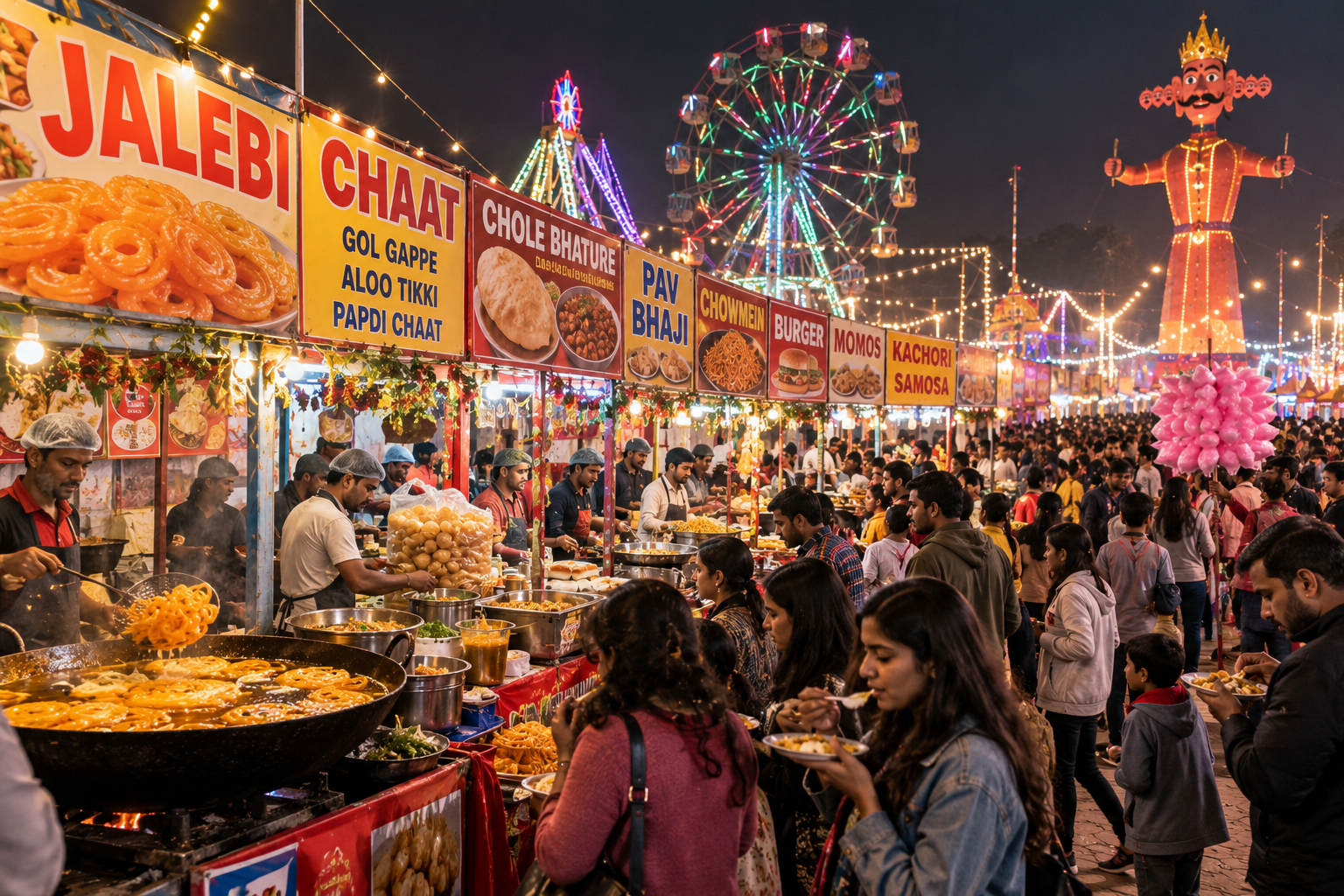
From piping-hot samosas and spicy gol gappe to buttery pav bhaji, street-style chowmein and colourful cotton candy, India’s Dussehra and Diwali melas turn food into an essential part of the festive experience.
The festival begins at the food stalls
The giant effigies of Ravana, the sound of crackers, colourful swings and rows of toy stalls may draw crowds to a Dussehra mela, but the irresistible aroma of street food often keeps them wandering long after the celebrations begin. The same excitement returns during Diwali fairs, where strings of lights illuminate food counters, vendors call out to customers and families move from one tempting stall to another.
For many visitors, a festive mela is incomplete without a plate of chaat, a serving of freshly fried jalebis or a paper cup filled with something spicy. Children tug at their parents’ hands for cotton candy, teenagers queue for chowmein and momos, and adults look for the familiar comfort of chole bhature, samosas and kachoris.
The attraction lies in the variety. Traditional Indian snacks share space with burgers, noodles, sandwiches and other fast-food favourites. A single visit can become a journey through sweet, sour, spicy, crunchy and buttery flavours, with every stall offering a different reason to stop.
Food at these gatherings is not merely a way to satisfy hunger. It is part of the excitement, the family outing and the memories people carry home after the fairground empties.
Jalebi: The golden spiral everyone waits for
Few sights can compete with fresh jalebis emerging from a kadai of hot oil. Vendors squeeze batter into circular patterns, turn the spirals until they become golden and crisp, and transfer them into sugar syrup. The result is a sweet with a crunchy exterior and a syrup-soaked centre that is best enjoyed while still warm.
At festive melas, the preparation is almost as entertaining as the eating. People gather around the counter to watch each batch being made, while the sweet aroma travels through the surrounding stalls.
Jalebi is a familiar presence at celebrations across northern India, although its popularity extends much further. It is also paired with rabri in some places, creating a richer dessert that combines crisp sweetness with thickened milk. In Gujarat, jalebi is famously eaten with fafda, a combination closely associated with Dussehra festivities.
For many fairgoers, buying jalebi is a ritual rather than an afterthought. One serving becomes a reward after a ride, a treat for children or a sweet ending to an evening spent walking through the crowds.
Gol Gappe and Chaat: The real crowd-pullers
If one food counter can attract a queue within minutes, it is often the gol gappa stall. The vendor cracks open a crisp puri, fills it with potato or chickpeas, adds tangy water and hands it over before preparing the next one. Customers eat quickly, return for another and debate which flavour deserves the final bite.
Known as pani puri in parts of western India and puchka in Bengal, the snack takes different forms across the country. Its appeal lies in the combination of textures and flavours: crisp shells, soft fillings, spicy water and a sharp burst of tanginess.
Chaat expands the possibilities even further. Aloo tikki arrives sizzling from the griddle, topped with chutneys and spices. Papdi chaat combines crunchy wafers with yoghurt, potatoes and sev, while dahi bhalla offers a softer, cooling contrast. Bhel puri brings together puffed rice, vegetables, chutneys and crunchy toppings in a mixture that is assembled moments before serving.
At a mela, these snacks are easy to share and simple to eat while moving between attractions. The stalls also invite friendly competition, with visitors defending their favourite combinations of sweet chutney, green chutney and spice.
The result is a food experience built around instant gratification: one plate disappears, and another temptation is already waiting nearby.
Samosas and Kachoris: Small snacks, big appetites
The humble samosa is one of the most recognisable sights at Indian snack counters. Its crisp, triangular shell usually holds a spiced potato filling, although variations include peas, lentils and other ingredients. Served with chutney, it offers a familiar combination of crunch and warmth.
Kachoris bring their own appeal. These round, often flaky pastries may be filled with spiced lentils, onions or other regional ingredients. Depending on the style, they can be eaten on their own or served with potato curry and chutneys.
At a festive fair, both snacks work perfectly for visitors who want something filling without sitting down for a full meal. A family might order several pieces to share, while someone waiting for a performance may grab a quick plate before returning to the crowd.
Their popularity also reflects the practical side of mela food. Vendors can prepare batches in advance and fry or reheat them as demand rises. For customers, the snacks are familiar, affordable options that can be enjoyed at almost any hour of the celebration.
Chole Bhature: When a snack becomes a feast
Some visitors arrive at a mela intending to eat just one thing and leave with a full plate of chole bhature. The combination of spicy chickpea curry and large, puffed, deep-fried bhature is a favourite across northern India, particularly among those who enjoy hearty street-style meals.
The experience begins with the sight of bhature swelling in hot oil before being lifted out, golden and airy. They arrive beside a bowl of richly seasoned chickpeas, often accompanied by sliced onions, green chillies or pickle.
Unlike gol gappe or a samosa, chole bhature demands a little more time and space. It is the sort of dish people choose when hunger catches up with the excitement of the fair. Friends may split a plate before deciding to order another, while families use the meal as a break between activities.
Its presence alongside smaller snacks shows how festive food stalls cater to different appetites. Some visitors want to keep sampling, while others are looking for a substantial meal before continuing their evening.
Pav Bhaji: Butter, spice and a sizzling tawa
Few food counters are as visually inviting as a pav bhaji stall. A vendor works a broad, hot griddle, mashing vegetables into a thick mixture with spices, butter and a splash of colour. Bread rolls are toasted on the same surface until their edges turn golden.
The combination of buttery pav and spicy bhaji has become a familiar street-food favourite well beyond Maharashtra, where the dish developed its distinctive identity. At melas, the sizzling preparation and the aroma of butter often attract people even when they had not planned to stop.
The dish is also convenient for groups. A plate can be shared, additional pav can be ordered, and the level of spice can often be adjusted to suit different preferences. Some stalls offer cheese or other additions, giving the classic preparation a more indulgent twist.
For visitors moving between rides, performances and shopping counters, pav bhaji provides a satisfying pause. It is street food that feels substantial without losing the lively, informal character of the fairground.
Chowmein, Burgers and the changing mela menu
Walk a little farther and the smell of fried spices gives way to the sharp sizzle of noodles hitting a hot wok. Street-style chowmein, often prepared with vegetables, sauces and seasonings, has become a familiar choice at fairs across many Indian cities.
The appeal is easy to understand. It is served quickly, can be eaten from a disposable plate and offers a flavour profile that differs from traditional snacks. Some stalls add extra chilli, while others offer variations with paneer, eggs or meat, depending on their menus.
Burgers, sandwiches, fries and rolls have also become common sights at contemporary food counters. Their presence reflects changing preferences, particularly among younger visitors who want a mix of familiar fast food and traditional Indian favourites.
The menu at Delhi’s Dussehra and Ramlila melas is evolving, too. An October 20, 2026, report by India Today described sushi appearing alongside established mela staples such as chaat, gol gappe, aloo tikki and pav bhaji. The development illustrates how some fairs are broadening their offerings while retaining the street foods that have long attracted crowds.
Yet the classics continue to hold their ground. A visitor may try a newer dish out of curiosity and still return to the samosa stall before leaving. At a mela, novelty and nostalgia can share the same plate.
Gudiya Ke Baal: A little magic on a stick
For children, few treats capture the playful spirit of a fair quite like gudiya ke baal, the fluffy pink or brightly coloured cotton candy often sold on sticks. Light as a cloud and almost too large to finish, it is as much a visual attraction as it is a sweet.
The vendor’s equipment transforms sugar into fine strands that gather into a soft mass. Children watch the colourful confection grow before choosing a stick of their own, while parents often find themselves buying one simply because it has become part of the outing.
Unlike a plate of chaat or a serving of chowmein, cotton candy is less about hunger and more about fun. It can be carried through the fair, photographed, shared or eaten slowly while watching the crowd.
Its charm lies in its simplicity. In an environment full of noise, bright lights and constant movement, a colourful cloud of spun sugar can become one of the evening’s most memorable purchases.
More temptations: Momos, pakoras, kulfi and chuski
The mela food trail rarely ends with the most familiar dishes. Depending on the location and the vendors present, visitors may find steaming momos, crisp pakoras, bread pakoras, rolls, roasted corn, fries and a range of other quick bites.
Momos have become particularly popular with younger customers, with stalls offering steamed and fried versions alongside spicy chutneys. Pakoras, meanwhile, are a familiar choice for those who prefer something hot and crunchy. Their appeal becomes especially strong on cool evenings, when freshly fried snacks feel like the perfect accompaniment to a stroll.
Dessert counters provide another reason to linger. Kulfi offers a creamy, traditional alternative to packaged ice cream, while chuski delivers a colourful combination of crushed ice and flavoured syrup. Depending on the fair, visitors may also find rabri, gulab jamun, laddoos and other sweets.
These additional choices make the fairground a place where every member of a family can find something appealing. One person may want spicy noodles, another may be searching for a sweet, and a child may be unwilling to leave without a second helping of cotton candy.
The people and memories behind every plate
Behind the colourful stalls are vendors who work through long hours, often preparing food continuously as crowds build. They chop vegetables, mix batter, fry snacks, assemble plates and manage queues, all while trying to maintain consistent taste and serve customers quickly.
For many small food businesses, festive fairs offer an opportunity to reach customers beyond their usual neighbourhoods. A popular stall can attract repeat visitors throughout the evening, while a distinctive preparation may persuade customers to recommend it to friends and family.
Food also becomes part of the social experience. Friends share plates, parents buy treats for children, and groups pause to decide what to try next. The smallest purchases can become part of a much larger memory of the celebration.
Food safety remains important in these crowded settings. Clean utensils, safe water, proper storage and hygienic handling are essential, particularly when stalls serve large numbers of people in temporary spaces.
A fairground feast that stays with us
When the lights begin to dim and families make their way home, the memory of a festive mela often includes much more than the main event. It may be the first bite of a hot jalebi, the spicy water of a gol gappa, the buttery pav bhaji shared with friends or the cotton candy that a child refused to put down.
Dussehra and Diwali melas bring together the familiar and the new, placing traditional Indian snacks alongside contemporary fast food in a setting built around celebration. Their food stalls offer variety, convenience and the simple pleasure of trying something delicious while surrounded by family, friends and festive excitement.
The dishes may change from one fair to another, but the ritual remains recognisable: walk, look, smell, choose, share and repeat.
And perhaps that is the real magic of mela food. It does not need a grand setting or an elaborate presentation. Sometimes, all it takes is a paper plate of chaat, a freshly fried samosa or a bright pink stick of gudiya ke baal to make an ordinary evening feel like a celebration.