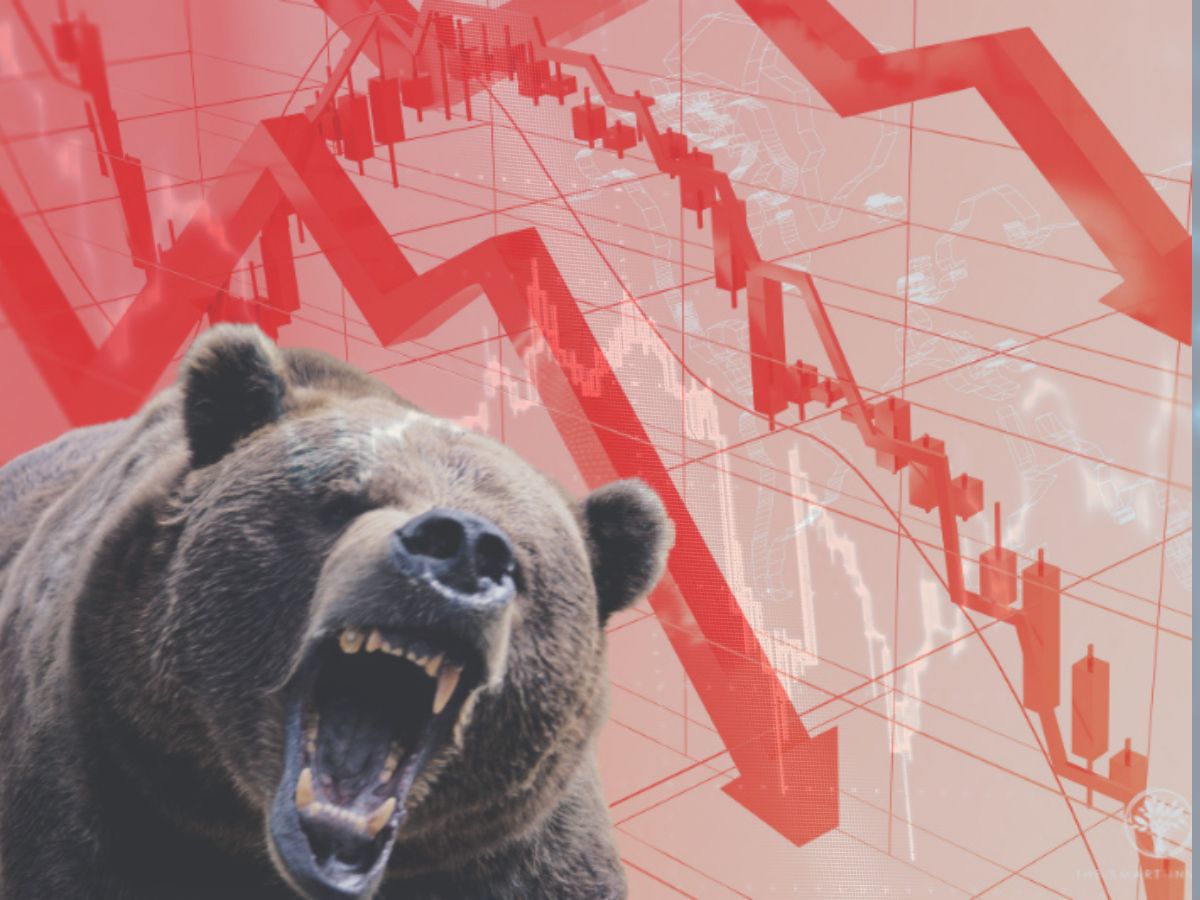
The bear-forces continue to pull the markets down, breaking major support levels.
The Indian stock market closed in losses, as benchmark indices suffered heavy losses in the wake of renewed fears of US tariffs on Indian exports and uncertainty regarding the world economy. The opening, blue-chips, sectoral performance, the consolidation or the closing, majority indices traded in red. The BSE Sensex closed the day lower by 849.37 points, or 1.04%, at 80,786.54 points, and the NSE Nifty 50 lost 255.70 points, or 1.02%, to close at 24,712.05. Around 2,750 shares dropped against 1,167 advancing on the NSE, and 125 shares unchanged.
Apart from the FMCG sector, which was the sole bright spot with an index increase of 0.91%, all the major sectors closed in the red. PSU Banks, metals, pharma, oil & gas, consumer durables, real estate, and telecom sectors declined between 1-2%. Key blue-chip shares like Sun Pharma, Tata Steel, Bajaj Finance, and Trent were among the largest losers, each down by about 3%. On the other hand, choose consumer automobile and select FMCG firms like HUL, Maruti Suzuki, Nestle India, TCS, and ITC logged gains, which helped to soften the overall market decline.
ALSO READ | Suzuki Announces ₹70,000 crores investment in India, Shares Jump!
Market drivers were the fallout from the US government announcement of additional 25% tariffs on Indian products being effective from August 27, making the total US tariff 50%. This created apprehension regarding slowdowns in exports and adverse effects on corporate profitability, triggering selling pressure mainly in export-oriented industries and financials.
Midcap and smallcap segments of the market lagged behind, with the BSE Midcap index losing 1.3% and the Smallcap index dipping 1.7%, demonstrating risk aversion on the part of investors. India VIX, popularly called the market's fear index, went up by 3.69%, marking higher volatility and uncertainty in market mood. Indian rupee too weakened, closing lower by 10 paise at 87.68 per US dollar, adding to fears of currency risk.
ALSO READ | Indian Markets Rattle: 25% U.S. Tariff Pushes Sensex, Nifty Lower
Foreign Institutional Investors (FIIs) sustaining the selling spree worsened the bearish sentiment. FIIs sold Indian equities for ₹2,466 crore on August 25, while Domestic Institutional Investors (DIIs) eased some of the pressure with net buying of approximately ₹3,178 crore, reflecting sustained domestic support in the face of foreign outflows. Year till now, FIIs have been steady net sellers, offloading almost ₹1.90 lakh crore, whereas DIIs have been net buyers to the extent of ₹4.77 lakh crore, evidencing a vital change in market dynamics and investor mix.
In spite of tariff pressures and foreign selling pressures, experts stress the domestic economy's resilience fuelled by robust consumption. They permit guarded optimism for selective sector plays in infrastructure, FMCG, and domestic-facing companies, particularly given the earning momentum that is likely to pick up over the next few quarters. Nonetheless, investors are recommended to have a diversified portfolio and be cautious of worldwide uncertainties as well as geopolitical risks.
ALSO READ | IPO Overview: Anlon Healthcare Grabs Attention amid Risks
In short, the Indian share market on August 26, 2025, closed sharply down, weighed by trade tensions and foreign investor wariness. The strength of domestic institutions and selective sectors gave some relief, but uncertainty still prevails, keeping volatility high as investors manage a difficult macroeconomic and geopolitical environment.