
As technology and infrastructure continue to develop, airports are now beginning to act as venues for displaying regional culture and heritage rather than just functioning as transportation centre. In many places around the world, there have been large-scale artworks commissioned in airports so that visitors can be introduced to the heritage of the new place they are in. The Noida International Airport is an example where two massive artworks have been commissioned by Padma Shri artist Paresh Maity.
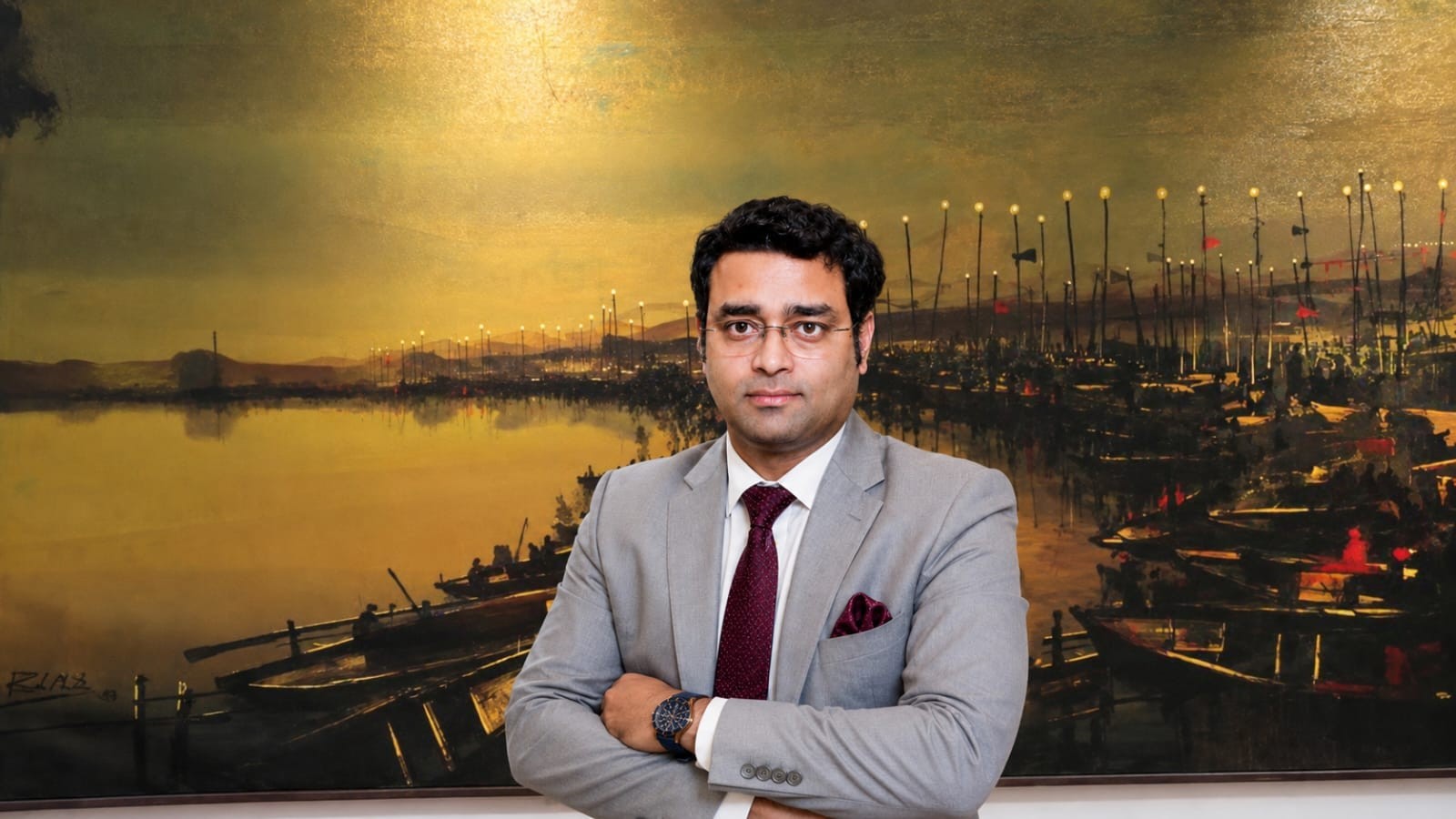
According to Nitesh Shrivastava, Government Approved Art Valuer and Founder of A2Z Valuers, the artworks at the airport have a multi-crore valuation while also holding great cultural significance. As he says, the commissioning of these works of art reflects the fact that modern day infrastructure projects recognize the need to incorporate art into the public sphere.
Beyond Monetary Worth
The artist believes that the worth of such large-scale works of art cannot simply be quantified in monetary terms. While these are indeed valued in the millions, they also have the worth of enriching public space, bolstering cultural identity and acting as a representation of the country’s artistic heritage in front of millions of viewers.
“Monumental public artworks acquire their value not only in terms of their artistic merit but also because of their enrichment of public space and strengthening of cultural identity and representation of India’s art heritage in the global world,” says Nitesh Shrivastava.
He adds that the works of art created for big public infrastructural projects go on to become priceless cultural assets for posterity.
Jagriti (Awakening): A Visual Journey Through the Landmarks of Uttar Pradesh
The centerpiece of the art collection in the airport is a six panel painting called Jagriti (Awakening), which measures around 100 feet in size. This painting was made by Paresh Maity, who uses the painting to depict the spiritual and cultural history of Uttar Pradesh through visual medium.
Instead of depicting only the famous architectural monuments of the region, the artist has connected various landmarks using the imagery of the holy rivers of India in his composition. The painting depicts ghats of Varanasi, Dhamek Stupa at Sarnath, Taj Mahal in Agra, Kusum Sarovar in Mathura, Ayodhya, and Mahakumbh in one single painting.
This painting slowly shifts from the colors of warm orange and gold depicting sunrise to reach the word जागृति in the center of the painting.
According to Shrivastava, what makes this painting powerful is its ability to express the living cultural heritage of India in a modern visual language that is accessible for all travelers using this airport.
Mystic Abode Provides an Opportunity for Contemplation
Alongside the painting is the installation of Mystic Abode, a structure of more than 8,000 brass bells measuring 12.5 feet tall.
The structure takes after the traditional Indian house shape and invites passengers to walk through, making the tinkling of many bells. It provides an opportunity to find tranquillity amid the fast environment of the international airport while being inspired by India’s spiritual tradition.
In the opinion of Shrivastava, the installations like Mystic Abode show the potential of public art to be interactive and provide the opportunity to live the culture, not only look at it.
India Jumps on a World Trend
Worldwide, the famous artists are invited to create the permanent installations which will define the destination by the airports. These artworks will contribute to the tourism and cultural diplomacy and at the same time, to be the memorable experience for the visitors.
Shrivastava points out that Noida International Airport represents this global trend in its own Indian manner using the art of Paresh Maity.
Indian artworks used to appear mostly in the gallery, museum or private collection settings for decades. Now, their appearance in public infrastructure makes them available for millions of people every day.
Raising the Benchmark for Public Infrastructure
According to Shrivastava, such commissions as the one for Noida International Airport will serve as a good example for a new standard on how to include cultural expressions in public infrastructure projects throughout the whole country.
“The Noida International Airport commission shows that development of infrastructure and culture can proceed hand in hand. It shows confidence in Indian artists, stressing the necessity to combine art with public space utilized by millions of people.”
When India continues developing new airports, metro systems, and other infrastructure projects, it becomes evident how culture can be included in infrastructure development processes.
Through Jagriti (Awakening) and Mystic Abode, Paresh Maity’s work turned Noida International Airport not only into a place for take-off and landing of aircrafts, but also into a place where visitors can get acquainted with Indian culture through its history and art.