
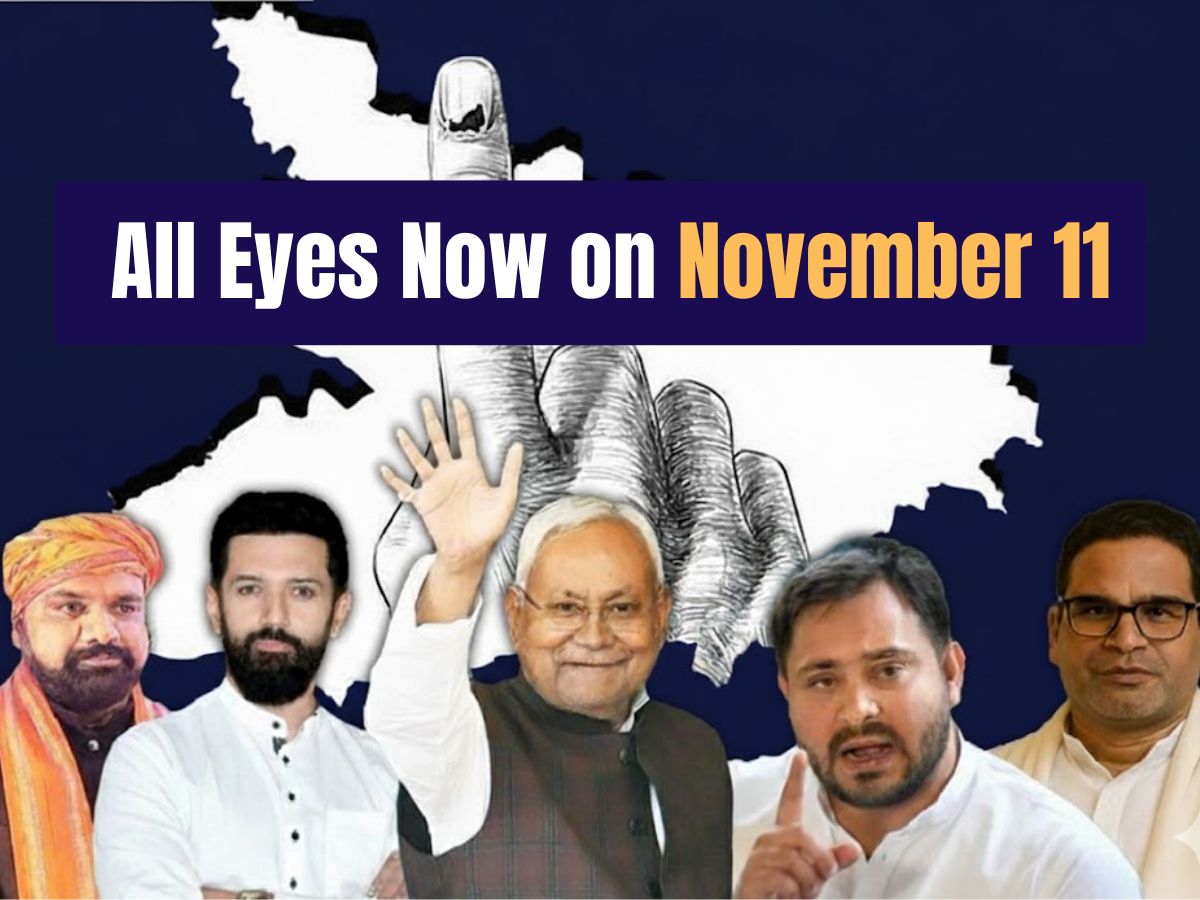
Sunday marked the end of the intense and frequently contentious campaign for the Bihar Assembly elections, paving the way for a pivotal final round of voting. After nearly a month of sharp political exchanges and power-packed rallies, the fate of the state now rests with voters, who will deliver their verdict on 122 seats on November 11.
What is at Stake in This Final Phase?
The second phase will decide the political future of several prominent ministers and lawmakers. Key figures in the fray include JD(U) ministers Sumit Kumar Singh and Leshi Singh, BJP’s shooter-turned-politician Shreyasi Singh, and BJP minister Neeraj Kumar Singh. Whether the opposition INDIA alliance can pull off an upset or whether the ruling National Democratic Alliance (NDA) maintains power will depend heavily on the results of these elections. The results from these 122 seats, combined with the first phase, will ultimately shape the next government in Patna.
How Did the Opposition Leaders Conclude Their Push?
The campaign’s final days saw a whirlwind of activity from national leaders crisscrossing the state. Rahul Gandhi ended his campaign in the strategically important Seemanchal belt, focusing on uniting minority voters. In a significant political milestone, Priyanka Gandhi Vadra joined the Bihar campaign for the first time, infusing the Congress effort with fresh enthusiasm and a new approach. However, Rahul Gandhi’s central allegation of “vote chori” (vote theft) against the BJP failed to become the dominant narrative of the election.
What Was the BJP’s Closing Strategy?
Prime Minister Narendra Modi personally led the BJP’s high-octane campaign in the state, addressing 14 rallies that spotlighted his government’s schemes and featured pointed criticism of the opposition. The party’s chief strategist, Union Home Minister Amit Shah, camped in Bihar for several days, personally managing the campaign and focusing on constituencies where the BJP is traditionally weak. The party deployed a massive star power, including several Union Ministers and Chief Ministers from BJP-ruled states.
Where Were the Key State Leaders?
Away from the national limelight, Chief Minister Nitish Kumar conducted a quieter, more focused campaign. Nitish Kumar, hoping to secure his fifth term as chief minister, maintained a modest campaign strategy with smaller rallies and unplanned roadshows. His nonappearance at several rallies alongside PM Modi stirred rumors of internal discord in the NDA, though his party brushed them off. Tejashwi Yadav, representing the INDIA bloc, countered with an energetic campaign centered on youth and employment.
Also Read: Ecuador’s Prison Crisis Deepens: Four Inmates Killed in Gang-Related Violence
Who Was the Wildcard in This Election?
The polls saw a fresh entrant in Prashant Kishor and his Jan Suraaj Party, which departed from the usual high-profile campaigns. Pitching himself as a reform-driven alternative, Kishor focused on direct public engagement through door-to-door canvassing. His emphasis on citizen engagement and governance suggested a different kind of politics for Bihar, even though his political impact is still unknown.